All the news that’s fit to print — grouped by subject, and within each group in the order it was printed.
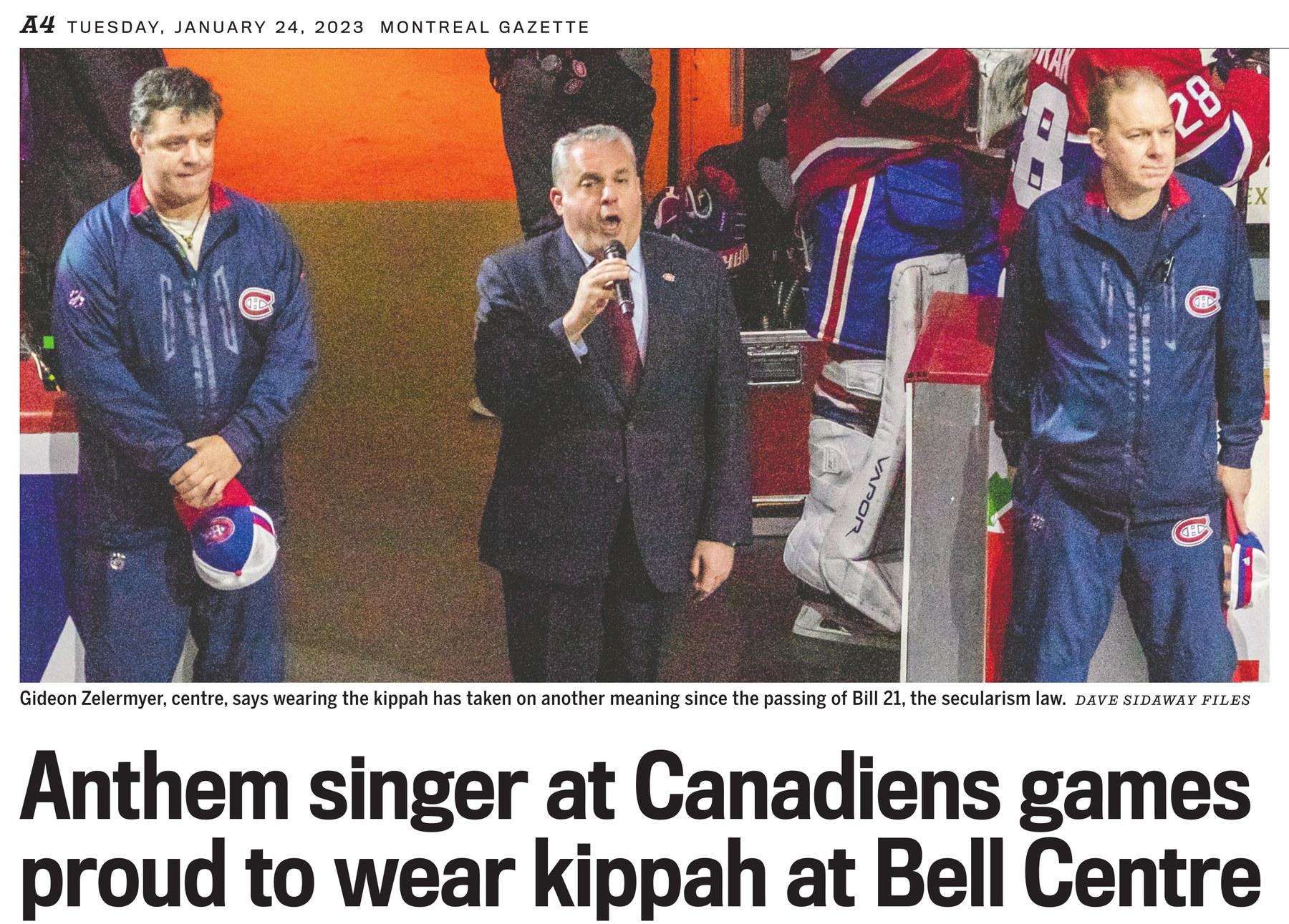
Montreal Gazette, page A4, 24 January 2023 — Brendan Kelly on the anthems, and on wearing the kippah at the Bell Centre. The entry is under The anthems below.
Every piece below is linked to its source, and those links open in a new tab so you don’t lose your place here. Some sit behind a subscription; the summaries are written to stand on their own either way.
Not coverage, but a cited voice
Books & catalogues
The difference is worth stating: the pieces further down are journalists writing about the work. These are writers who used him as a source.
Michael Posner
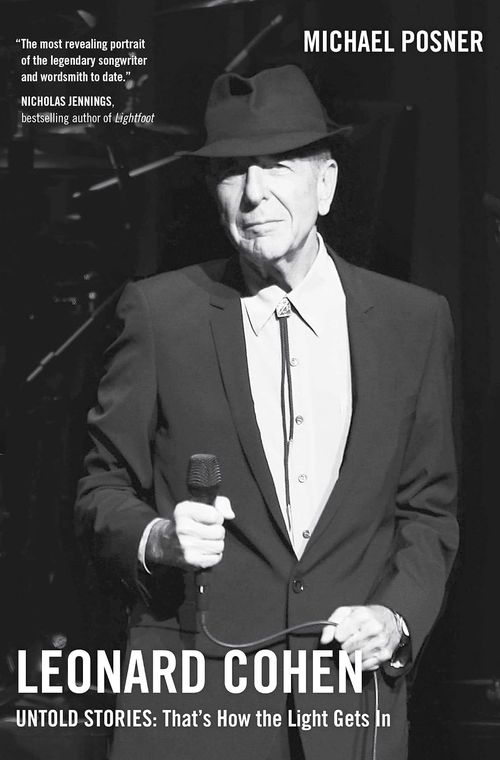
Leonard Cohen, Untold Stories Simon & Schuster · 3 vols. · 2020–2022
An oral biography, without a narrator
Posner's three volumes are built from hundreds of interviews with the people who knew Cohen — family, friends, colleagues, rivals, lovers — set down without an intervening voice. Contributors across the series include Joni Mitchell, Allen Ginsberg, Robert Altman, Adrienne Clarkson and Irving Layton.
Zelermyer appears briefly in Volume 1, The Early Years, and at length in Volume 3, That's How the Light Gets In, which covers the last thirty years of Cohen's life: the correspondence, the recording, and the end. Posner interviewed him directly.
Matti Friedman
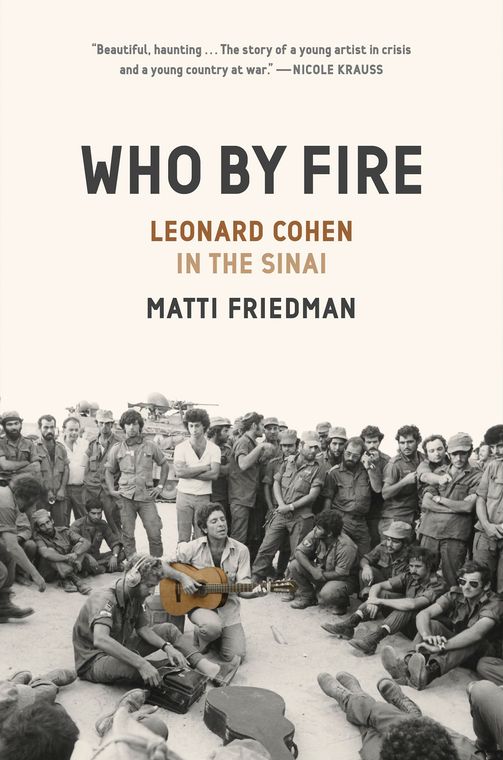
Who by Fire: Leonard Cohen in the Sinai · 2022
The synagogue at both ends
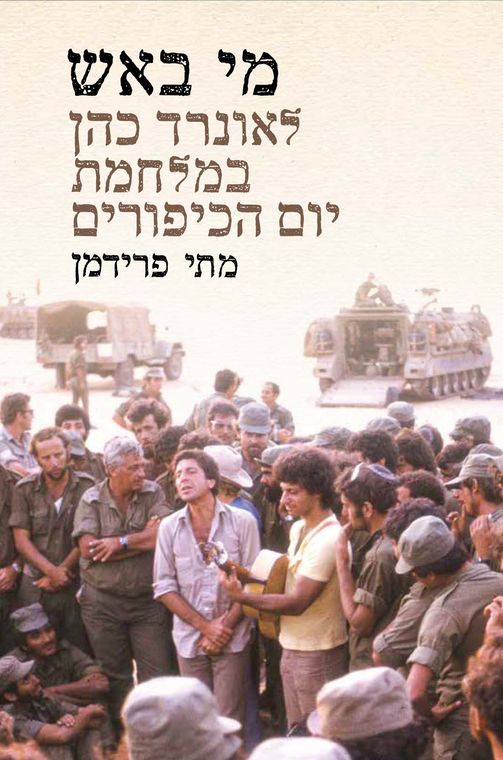
Friedman's account of Cohen's 1973 tour of the Sinai front takes its title from the Unetaneh Tokef, the High Holy Day prayer. Zelermyer appears in connection with Congregation Shaar Hashomayim — its place at the start of Cohen's life, and its return at the end, in You Want It Darker. Friedman also interviewed him directly, and he performed at the book's launch programme in New York. The book has since appeared in more than a dozen languages, Hebrew among them.
Exhibition catalogues
Musée d'art contemporain de Montréal The Jewish Museum, New York
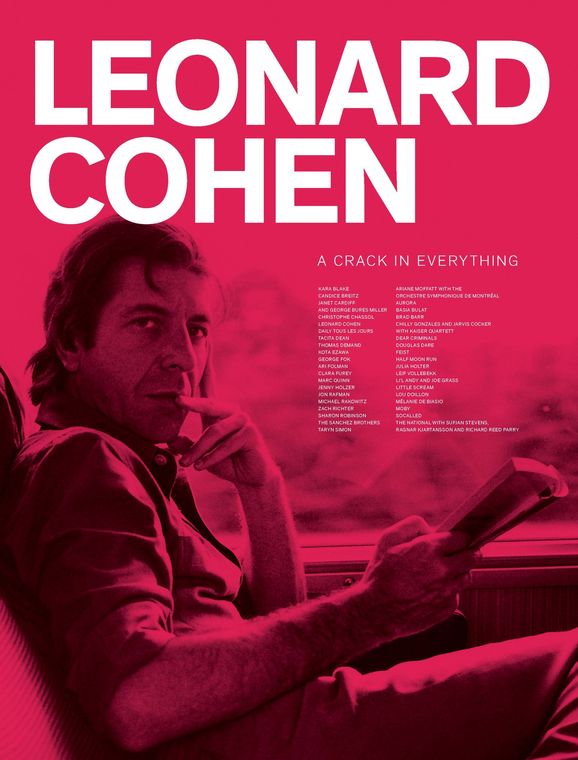
Leonard Cohen: A Crack in Everything
Zelermyer appears in the catalogues of both the originating exhibition in Montreal and its New York presentation, in connection with Candice Breitz's installation I'm Your Man (A Portrait of Leonard Cohen) — of which the Shaar Hashomayim choir forms one of nineteen channels.
Published the day the single appeared, and re-published as Maclean's final Cohen profile when he died seven weeks later. Contains Cohen's own account of how the collaboration began, and a description of the choral passage on It Seemed the Better Way as an ancient benediction motif.
“Cohen's name comes from kohein — the Hebrew word for priest. At the end, the priestly heritage came full circle, and it was the son who connected the dots.”
The first substantial piece on the collaboration. Asked for his thoughts, Cohen wrote to the paper directly, saying the harmonies had been echoing in his mind since childhood, and expressing deep gratitude to the cantor and the choir for lending their gifts to his songs.
Darkness and Light: Leonard Cohen and the New Cantors
A survey arguing that classical Ashkenazi khazones is in the middle of a revival, and naming Zelermyer among those leading it. Nadler — professor of comparative religion at Drew, and rabbi of The Shaar from 1981 to 1991 — traces the lineage outward from Naftali Herstik through a generation of younger cantors.
Remnick's profile, built on interviews conducted in the weeks before Cohen died. In the passage explaining hineni — Abraham's answer to the summons, a man declaring his readiness at the end — he records that Cohen asked the cantor of the synagogue of his youth to sing the backing vocals.
His own account, written in the days after the funeral: the correspondence, the cemetery visit before Rosh Hashanah, the Simchat Torah setting of Adon Olam to Tower of Song, and the last words the two men exchanged.
The Times chose You Want It Darker as one of twenty-five songs defining the direction of music, and Mahler built his essay around the Montreal end of the recording — the email, the choir trying arrangements in the sanctuary, the Kaddish and Hineni beneath the lyric, and the 1949 Hebrew-school photograph still hanging on the wall.
He frames the whole of Cohen’s last chapter with the cantor: it opens on Zelermyer reading the email, and closes at the graveside.
“It wasn’t an email from God, but it was close.… Weeks later, Cohen’s coffin was lowered into the earth at Shaar Hashomayim’s cemetery. Zelermyer stood next to Cohen’s family as they recited the Kaddish.” Jonathan Mahler — the first and last lines of the essay
Star-studded Montreal memorial concert celebrates life and work of Leonard Cohen
A review of the Bell Centre tribute, which records Adam Cohen's account of his father's instructions — a pine box beside his parents, a small memorial in Los Angeles, and if there is to be a public event, hold it in Montreal.
Lana Del Rey, Courtney Love, Sting & More Honor Leonard Cohen at Tower of Song Memorial Tribute
Bliss's account of the Bell Centre evening: fifteen thousand six hundred people, two and a half hours, one act following another and timed to the minute for the television cameras. Her set list has the Shaar Hashomayim choir twice — live on the stage after the interval, while Willie Nelson, Céline Dion, Peter Gabriel and Chris Martin traded lines on Tower of Song from a black-and-white film; and then last of all, closing the programme.
She also records two things the announced bill did not: that Philip Glass, previously listed, did not appear, and that the choir was among the performers who were “either surprises or late additions.”
“… the choir from Cohen's local synagogue, Shaar Hashomayim, backed his voice on the title track from his final album, You Want It Darker — as they appear on the record. Then all the performers came out on stage to line up and take a bow.” Karen Bliss
Pot Advertising, Leonard Cohen and Chimps: The Canada Letter
The paper's weekly letter from Canada, a year to the month after Cohen's death. Andrea Kannapell, an editor at the Times, came up from New York for the Bell Centre tribute and joined a Leonard Cohen Forum pilgrimage the day before — two busloads of aficionados from the Netherlands, Germany, Ireland, Andorra and Cyprus. The tour was bookended by houses of worship: Notre-Dame-de-Bon-Secours at the end of the day, and, at the start, the synagogue of Cohen's youth.
“At the temple, the very personable cantor, Gideon Zelermyer, gave an entrancing history of Cohen's relationship with the synagogue and the evolution of the synagogue choir's backing on You Want It Darker.” Andrea Kannapell
Montreal cantor up for Grammy for work on Leonard Cohen album
Written on the eve of the ceremony. Records the cantorial duties at Cohen's private family funeral, and the memorial service in Los Angeles to which the family brought Zelermyer and the choir a month later.
“I'm a cantor, which means I'm a religious functionary. My portfolio is music, aesthetics and liturgy. I'm that little dot on the pulpit, up to 65 rows away from where people are sitting. The rest has been luck.”
Cohen, cantor, choir win Grammy for best rock performance
Filed minutes after the announcement, at a ceremony held before the main presentation at Madison Square Garden. Cohen's first Grammy for his own work, awarded posthumously.
“A Grammy Award — that is beyond my wildest dreams. I just let out a scream when I heard it announced. I hadn't been this nervous since my bar mitzvah.”
“The relationship, the collaboration, the funeral, the memorials, the tribute concerts — and now this.”
When you start to look back: 18 older men sing Leonard Cohen's I'm Your Man
Haber stands inside the work and describes it from there: a ring of body-sized screens suspended in the dark, on each an older man awaiting his cue — in a tan suit, a tattered t-shirt, a sweater tied at the shoulders, in drag — and then all of them singing. She reads it as a meditation on masculinity, fragility and communion, and notes that the choir behind them is the one heard on You Want It Darker. Breitz, on why she cast the age she did:
“I was interested in this moment in life where one starts to look back and contemplate what kind of a life one has lived and what kind of a life one wishes to continue living.” Candice Breitz
Is Leonard Cohen the New Secular Saint of Montreal?
A report on the city's Cohen mania a year and a half after his death — the nine-storey mural in the Plateau, a speakeasy called Bar Suzanne, pilgrims ordering his lamb chops at Moishes, and A Crack in Everything at the Musée d'Art Contemporain, where Candice Breitz's installation plays with The Shaar choir behind it. Zelermyer is the piece's first voice on what the devotion is made of: the liturgical melodies of Cohen's upbringing that brought him solace in his illness, and the grave in the synagogue's cemetery, beside three generations of his family — “Cohen's grave always has footsteps leading to it, no matter how high the snow.”
“What Bruce Springsteen is to New Jersey as a prophetic voice, Cohen is to Montreal. His lyrics are not ‘Baby, baby.’ They are deeply profound.”
Why Leonard Cohen's final album features the cantor from his home synagogue
On the Grammy nomination for Thanks for the Dance, and the men's choir on Puppets, recorded in a garage near Cohen's old house.
“To have been a small footnote in the connection between Leonard, his religious identity, his identity as a son of Shaar Hashomayim — and ultimately to have been able to put him in the ground with dignity — that is an unforgettable part of my life's experience. And not exactly what you imagine when you become a cantor.”
Face to face with Leonard Cohen's choir in I'm Your Man
A review of Candice Breitz's installation at the Contemporary Jewish Museum in which the choir is the subject. Quick notes that Breitz miked the room as well as the singers, so the recording keeps the pages of the score turning and the conductor counting the bars — everything a session normally removes.
Has Leonard Cohen’s most Jewish song become a ‘Hallelujah’ for darker times?
The song surfacing twice in one season — over the finale of FX’s The Patient, and in the trailer for Bones and All, where Timothée Chalamet chose it himself — and whether it is becoming the successor to Hallelujah. Zelermyer, on why it keeps being reached for:
“Leonard already had this reputation for being a prophet of darkness and he dies the night before Trump gets elected and releases this song about the dark nature of not just humanity but the dark nature of God in some ways.”
A review of An Evening of Light, with Stephen Glass accompanying. Covers If It Be Your Will — which Zelermyer calls Cohen's most Jewish song, noting that it paraphrases the viddui — and a dedication of Naomi Shemer's Lu Yehi to Rose Lubin, the lone soldier from Atlanta killed in Jerusalem.
An essay setting Cohen's last record against Swift's The Life of a Showgirl. Both writers, Pheterson argues, work the same seam — transcendent love against the wish to stay free — but where Swift's new songs resolve into happy endings, Cohen in his seventies stopped struggling against the paradox and turned to face it. Hineni is where she locates the difference.
“Released just weeks before Cohen's death, You Want It Darker is a collaboration with Gideon Zelermyer, who serves as cantor of Cohen's Montreal synagogue. It is also the only song in Cohen's repertoire featuring a choral chant in Hebrew: Hineni (here I am).”
Also: Times of Israel (Sept 2016) · Haaretz (Sept 2016) · Jerusalem Post (Nov 2019) · CBC News Montreal (Sept 2016) · Concordia University on Norman Ravvin's reading of the album (Oct 2016) · Westmount Magazine (Nov 2017) · ET Canada (Sept 2016) · The Jewish Museum, New York (2019) (opens in a new tab)
Israel · 2016 — 2022
The Hebrew press עיתונות בעברית
Coverage in the Israeli press, in Hebrew — gathered here because it is indexed nowhere in English. It arrives in three waves. First the autumn of 2016: the release of You Want It Darker, Cohen’s last interview, his death. Then the spring of 2017, when Yediot Ahronot sent a reporter to Montreal and published the decade of correspondence between Cohen and his cantor. And after that a slower literary reckoning, in which the song is translated into Hebrew verse and read as liturgy.
The song itself, carried in the poetry section four days after Cohen's death and set in Hebrew verse by the translator and theatre scholar Gad Kaynar-Kissinger. Not an article about the record but the record admitted as literatureSubscription may be required
Reading the track against the summons to Samuel. Written by someone who had heard the recording but not yet read the reporting: it registers only that "a cantor is heard praying" toward the end, and cannot say whose voice it is
The fullest Hebrew account of the collaboration, and the piece the others are downstream of. Yaniv Halili reported it from Montreal: ten years of email, Cohen signing as אליעזר beneath a seal of the priestly hands, his request for "the sound of Shaar Hashomayim — something more spiritual, deep, dark," the choir replacing the women who had sung behind him his whole career, and the cantor at the graveside
'Hineni, Eliezer': Leonard Cohen's Jewish Correspondence "הנני, אליעזר": התכתובות היהודיות של לאונרד כהן
The same reporting online, and the version that travelled. Carries the line Cohen wrote before Rosh Hashanah — I see you at Mount Sinai — and the self-portrait he sent weeks before he died
Leonard Cohen's Correspondence with the Cantor of the Montreal Synagogue Revealed נחשפו ההתכתבויות של לאונרד כהן עם חזן בית הכנסת במונטריאול
The Yediot story rewritten for a religious readership, which reads the priestly-blessing motif at the end of the album as the closing of a circle: born a Jew, and at the end a Jew
Hineni / Leonard Cohen: Two Small Letters to a Great Artist הנני / לאונרד כהן — שני מכתבים קטנים ליוצר גדול
The paper returning to the song eighteen months after its first attempt, this time with the reporting in hand. Names the cantor, quotes the request for the sound of the synagogue, and records that the lyrics reached Montreal from Adam Cohen with the Kaddish and lines of selichot among them
Nadav Halperin, published for the Days of Awe. Reads the track as a prayer rather than a song about one, and locates the last word precisely: hineni comes "from the mouth of the current cantor of the synagogue where Cohen prayed in his childhood"
Why a defining moment of HBO's I May Destroy You was scored by a synagogue
The story behind the close of episode eight. Michaela Coel found the choir's recordings through the Cohen album and wrote out of the blue; she chose two tracks and asked what the words meant without saying what the scenes were.
“It's not about bending what we do to meet the needs of pop culture. It's about being who we are, with people who are respectful of the authenticity of the statement. Nobody's asking me to sing Adon Olam to a Broadway tune.”
Why the shofar is the perfect soundtrack for I May Destroy You
A reading of the series through the Days of Awe. Skinazi hears the two pieces the choir sings — Ein Kitzvah and Uv’chein Yitkadash — as the show’s shofar: the call to reckoning that sounds under Arabella’s public accusation and again at the sea, holding judgment and mercy in the same hand.
2010 — 2026
On air
Four broadcast conversations, kept here because radio disappears the moment it is over. Each plays on this page; nothing loads until you press play.
Bill Richardson · September 2010 Saturday Afternoon at the Opera CBC Radio 2, national
The cantor, the tenor, and Lorenzo Da Ponte
An afternoon of Mozart, Salieri and Martín y Soler — three composers who shared a librettist, Da Ponte, born a Jew and trained for the priesthood — broadcast in the days between Rosh Hashanah and Yom Kippur. Richardson had spent an afternoon in Montreal the previous spring: first in the house, over the opera autographs inherited from Rabbi Mark Loeb of Baltimore, and then in the sanctuary. The second conversation is the fullest statement of the argument this whole site is making, that the cantor and the tenor are doing the same work.
“A leading tenor has to convince me that he’s in love, has to convince me that he’s going to war, has to convince me that he’s trying to save this girl from this evil villain — usually a baritone. In the same way, I need to be convincing. My job, more than anything, is to serve the text.”
“I know that I’m not the proverbial fourth tenor, and that’s fine with me. There are lots of my colleagues in the cantorate for whom that’s not fine.”
Loeb, who telephoned before every festival, and whose collection of autographs — Rosa Ponselle as Norma, a Met cast page signed by Ponselle, Serafin, Martinelli and Pinza, Hermann Jadlowker of Riga — came to Montreal after his death:
“His last words would be ‘give ’em heaven.’ And so that’s what I try to do.”
Part one · at home, over the autographs · 5 minutes
Part two · in the sanctuary · 14 minutes
24 September 2014 · Montreal Homerun, CBC Radio One Erev Rosh Hashanah 5775
Why this synagogue sounds the way it does
Recorded hours before the New Year began: the founding in 1846, the choir established in 1887, the western European choral tradition and what became of it, the striped trousers and morning coats still worn on the pulpit, and the four strands of repertoire that meet in a single service — old congregational tunes, golden-age cantorial writing, nineteenth-century Berlin and Vienna, and the congregation’s own compositions. The programme closes by playing Kaddish Shalom from the recording issued that summer.
“My congregants would wince if I say it, but it’s very Roman Catholic in a sense. The pageantry is on a high order at Shaar Hashomayim.”
“Part of the goal is to allow them to listen to something sublime and simple and beautiful, and be just as engaged in that moment as if they were singing or clapping or dancing.”
The interview in full · 7 minutes
Dan Laxer · May 2023 Montreal
A hundred years in Westmount, and what Cohen asked for
In studio before The Writings on the Walls, the concert that closed the congregation’s centenary year in the Kensington Avenue building. Laxer opens on the Grammy and the Juno, and the first minutes are the fullest account anywhere on this site, in his own voice, of how the Cohen collaboration came about — the boy of nine who had just lost his father, sitting in the sanctuary. Then the concert: the 1922 building, the scriptural verses set into the walls below the ceiling, and how those verses became the programme.
“His words to me, when he asked us to be on the album, were: I want the sound of the cantor and choir of my youth.”
“These writings on the walls are not an expression of foreboding. They are a message from our progenitors a hundred years ago, to guide us through.”
The interview in full · 9 minutes
Mitch Melnick · 24 April 2026 Melnick in the Afternoon · TSN 690
The anthems, the fandom, and a synagogue turning 180
Recorded a few hours before the Canadiens’ first home game of the playoffs — a Friday night, which meant the one place he could not be was the Bell Centre. He came in between the weekly voice lesson and the start of Shabbat. Melnick had praised an anthem on air a fortnight earlier without knowing whose it was; the singer wrote in to identify himself. What follows takes in a Hartford Whalers childhood and the 1986 series against the Canadiens that ended it, the audition in an empty Bell Centre, Roger Doucet as the model, twenty years as a season-ticket holder in the whites, and The Shaar’s hundred and eightieth anniversary this autumn.
“Loud and proud, keep it simple. I’m not out to satisfy the over-under on how long the anthem will be.”
“I’ll be in the room, but not singing Sunday. I’m waiting for the later rounds, when they need real divine intervention.”
Singer proud to wear kippah while belting out national anthems at Bell Centre
Also the fullest telling of the first night in 2010, when Guy Lafleur appeared in the corridor by the dressing room to say a friend had phoned that afternoon and told him to come and hear the new singer.
“I don't do it to make a statement, but I'm proud of the fact that by my very presence I am.”
Zwischen Stadion und Synagoge — Between stadium and synagogue
The Swiss Jewish weekly, on the anthems as liturgy carried into public space. Wüthrich — a hockey writer of thirty years’ standing rather than a religion correspondent — is good on the craft: in a full arena the singer hears his own voice come back late off the speakers, so he cannot follow the echo and must hold an internal pulse instead, a discipline the piece traces directly to cantorial practice. It also carries the Lafleur story, Michel Lacroix and Geoff Molson on the club’s conduct after 7 October, and the detail that he arrived in Montreal a Hartford Whalers fan who had resented the Canadiens since they ended his team’s playoff run in 1986.
«Ein Hymnenauftritt ist ein Hochrisikomoment. Tausende Zuschauer, nationale Symbolik, keine zweite Chance. Die Spannung vor dem ersten Ton ist enorm.» An anthem is a high-risk moment. Thousands of spectators, national symbolism, no second chance. The tension before the first note is enormous.
The fullest first-hand account: the audition in an empty Bell Centre, the accidental route to Fenway, and the story of bringing the Bell Centre organist to a school graduation.
Meet the Montreal organist trying to help the Habs hit a winning note
A profile of Diane Bibaud, organist to the Canadiens since 1987 — McGill-trained, cursed with perfect pitch, still overcome by stage fright before every home game at sixty-six, and playing the same Farfisa she started on, which she calls Ti Puck. She is the one person in the building who shares the anthem problem: “You're not allowed to make mistakes during the national anthem.” Near the end, Zelermyer appears — she once played his son's high-school graduation as a favour, and gave every pupil crossing the stage the fanfare a goalscorer gets.
“You hear this murmur in the audience. They introduce her to the crowd, and she gets a standing ovation.”
A review of Shirat HaNeshama HaYehudit at Beit Avi Chai in Jerusalem, with Cantor Chaim Adler and Raymond Goldstein — the earliest review in this list, and the paper's classical critic writing on hazzanut as a serious subject.
The first of the concerts, and the argument all the others are still making. Zelermyer sang it in Tucker's own cantor's hat and tallit, lent by his son.
Eleven cantors at the Toronto Centre for the Arts, among them Naftali Herstik — Zelermyer's own teacher. He returned for the second edition in 2016, and mounted his own in Montreal in 2024.
A musical and visual Kristallnacht commemoration at Westmount synagogue
On Sacred Echoes — a cantata for two cantors, narrator, orchestra and children's choir, performed against virtual reconstructions of the synagogues destroyed in 1938.
Shaar cantor and choir sing at UN Holocaust commemoration
Cantors had sung at the ceremony before; none had brought a choir. Zelermyer made the case that the collaboration between cantor and choir is the tradition, and the format changed — making them the first synagogue choir, and the first Canadians, to take part.
Remembrance Day event honours unsung women wartime heroes
On The Unsung and the world premiere of James M. Stephenson's Cantata for the Unsung. It ran two days before the concert; nobody writing it knew what else that day would hold.
Kent Nagano, Gideon Zelermyer elated to work on Elijah
On bringing the Orchestre symphonique de Montréal into the synagogue's sanctuary — its third visit in the orchestra's history, and its first in more than twenty-five years. The idea began a decade earlier when Nagano asked why the OSM goes to Notre-Dame every Christmas but never to The Shaar.
On bringing five cantors to The Shaar's main sanctuary, with Raymond Goldstein at the piano and part of the proceeds to the trauma unit at the Sourasky Medical Centre in Tel Aviv.
“I have wanted to bring this here for so many years. These days, fewer and fewer synagogues even have full-time cantors, so that makes this even more special.”
Montreal Chamber Music Festival marks the 80th anniversary of the end of the war
Jaap Nico Hamburger's own account of writing The Day After: the festival's commission specified Zelermyer's voice and suggested a Hebrew text, and he set verses from Isaiah for a sextet.
Also: Canadian Jewish News on the Bernstein centenary (2019) · CBC News and the Musée de l'Holocauste Montréal on Violins of Hope (Nov 2019) · Jerusalem Foundation on From Jerusalem to Toronto (Apr 2026) · Canadian Jewish News and The Suburban on the Shaare Zion centennial (May 2026) · Canadian Jewish News on Cantor Eric Moses's tenth anniversary (Mar 2011) · Daytona Beach News-Journal (Jan 2016) · La Presse on the Orchestre classique de Montréal's 80th season (Sept 2019)
On the Jewish Music Research Centre's recording of the liturgical tradition of Mikvé Israel-Emanuel in Curaçao — twenty-eight tracks drawn from fifteen boxes of old music covering nearly a century and a half of practice.
Not Dead Yet: The Remarkable Renaissance of Cantorial Music
Written four years before the Cohen album, which is the point: everything else that treats the work as significant comes afterwards. Nadler argues that classical hazzanut is reviving from the two constituencies that once despised it, and reviews The Shabbat Experience at length — unlike any other cantorial recording he knows, strictly thematic, and brilliantly realised.
Opera and Jewish Cantorial Music: a 21st-Century Update from Montreal
An essay in a classical-music publication that takes the relationship between opera and cantorial singing as its actual subject — the argument this site otherwise has to make on its own behalf.
Father John reached out to all, regardless of their faith
“As clergy, we understood where the other was coming from. On the same day, you can have the highest of highs and lowest of lows. That's difficult for anybody, but we're supposed to put a brave face on it all. He understood that.”
Beloved activist priest John Walsh reached out to paupers and prime ministers
The obituary that carries the origin of the friendship: in 2004, after The Passion of the Christ, Father John telephoned to borrow a Haggadah, a seder plate and a wine goblet. His congregation had asked him to demystify Jewish custom, and he intended to hold a seder. They ended up holding it together, and did so for years.
Once a Janitor, Now the Bar Mitzvah Photography King of Montreal
Braulio Rocha arrived from Madeira with fifty dollars and a battered Canon, took a job mopping The Shaar's floors, and had never met a Jew before he walked through its doors in 2015. He would break off vacuuming to sit in the pews and listen to the cantor sing. When a photographer failed to turn up for a bris, he offered to shoot it for nothing — and six years later was booked into 2023 with eight assistants working under him. Zelermyer, who hired him for his son Max's bar mitzvah, is quoted on why the story is a Jewish one:
“There is a virtue in our community of welcoming strangers as we, too, were strangers in a strange land. That is the story of Passover. There are times when you have to dust yourself off and move forward with life with a lot of uncertainty, and Braulio embodies that.”
It ran in the New York edition the next morning, 1 January 2022, page A6, under the headline A Janitor Reinvented as a Go-To Bar Mitzvah Photographer.
How one vintage watch has been making cantors' lives easier for more than 50 years
The Bulova Accutron is built around a miniature tuning fork. It hums a slightly flat F sharp at 360 hertz, and because nothing is done to produce the sound, it can be used on Shabbat when a tuning fork cannot.
Zelermyer learned of it in the autumn of 1999, aged twenty-three, on his first day in the choir of the Jerusalem Great Synagogue — when he wondered how everyone knew the note, and Naftali Herstik took the watch off his wrist, handed it over and said: listen. He later gave one to Azi Schwartz for his twentieth birthday.
“When I arrived in Montreal there were a handful of congregations with a weekly choir. Now The Shaar is the only one. In London, every major synagogue used to have a choir; now there are only one or two.”
Rosh Hashanah 5758 at Emanuel Synagogue in West Hartford, where a twenty-one-year-old served as cantor for the High Holy Days alongside his father, the congregation's rabbi of nineteen years. He was then a student at the Jewish Theological Seminary, training to become a rabbi himself.
“I have never heard of a father and a son together on the same pulpit conducting High Holy Day services.” Rabbi Gerald Zelermyer
Asked by the Seminary about having sung solo in Handel's Messiah two years running:
“I told them it was a beautiful piece of music, but I had trouble with the logic of the contents. The part I sang was from Isaiah, so it is not a compromise for me.”
He would make the same argument, in almost the same words, twenty-three years later — about a television series.
Evidence of dates
Listings & programmes
Calendars, roundups, brochures and concert programmes. Not writing about the work, but a record that it happened.
Date
Source
Event
2026
Jerusalem Foundation
From Jerusalem to Toronto, Beth Tzedec, with the Toronto Symphony
2025
Sinai Temple bulletin
A Concert to Help Heal a Nation, Wallis Annenberg Center, Los Angeles
2025
Temple Emanu-El-Beth Sholom
Rabbi's Table, in conversation with Rabbi Lisa Grushcow
2022
Anshe Emet programme
Richard Tucker's Legacy, Chicago, with Angel Blue and Matthew Polenzani
2018
B'nai Torah brochure
Pesach Extravaganza, Boca Raton, with symphony orchestra under Noreen Green
2016
UJA Federation, Toronto
The World's Greatest Cantors, second edition
2016
Palm Beach Synagogue
Cantorial Series, Shabbat morning
2015
UJA Federation, Toronto
The Shaar Hashomayim choir at Beth Sholom
2012
The Forward
Richard Tucker Day, New York — Eldridge Street Synagogue, with Joseph Malovany
2011
KlezKanada
The Shaar choir at the Bagg Street Shul
2011
Palm Beach Daily News
Guest cantor, Palm Beach Synagogue
2010
Sun-Sentinel
Three Canadian cantors at B'nai Torah, under Stephen Glass
2008
Sun-Sentinel
The Four Tenors, B'nai Torah, Boca Raton
2008
JMI newsletter, London
Voices in Harmony, Wembley Synagogue 80th anniversary
2005
JMI, London
Florida tour with the London Jewish Male Choir
2003
JMI, London
Barry Weinberg Jewish Choral Festival, St John's Smith Square