…s’il vous plaît, veuillez vous lever et retirer vos chapeaux et casquettes, please rise and remove your hats and caps…
He had grown up in Connecticut, a fan of the Hartford Whalers, whose one real run at a Cup ended at the hands of the Habs in 1986 when Claude Lemieux scored in overtime in Game 7 of the second round. The Canadiens went on to win it. He had not forgotten.
He arrived in Montreal in 2001 a hockey fan without a team. Then a friend handed him tickets to a game at the Bell Centre. That settled it. He has had season tickets in the whites since 2006.
He still loves every team in Boston except the hockey one that shall remain nameless. His first dog was called Fenway. The one after him is Wally, for the Green Monster.
In 2010 there was an audition, during the intermediate days of Sukkot: they turned the lights on in an empty Bell Centre — a sound person, a camera person, and a cantor — and he sang both anthems twice. Afterwards he asked how many others they were hearing that day. Just you, they said.
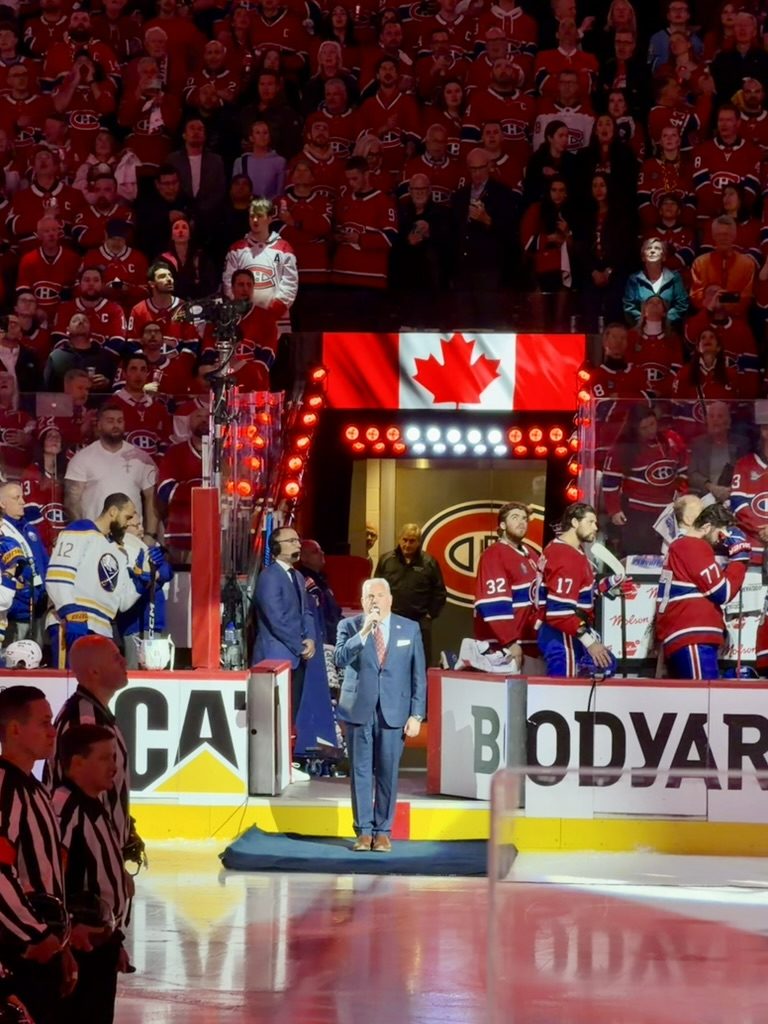
November 16 was settled on partly because he cannot sing on Shabbat. He wore a navy suit, a white shirt and a red tie — bleu, blanc et rouge.
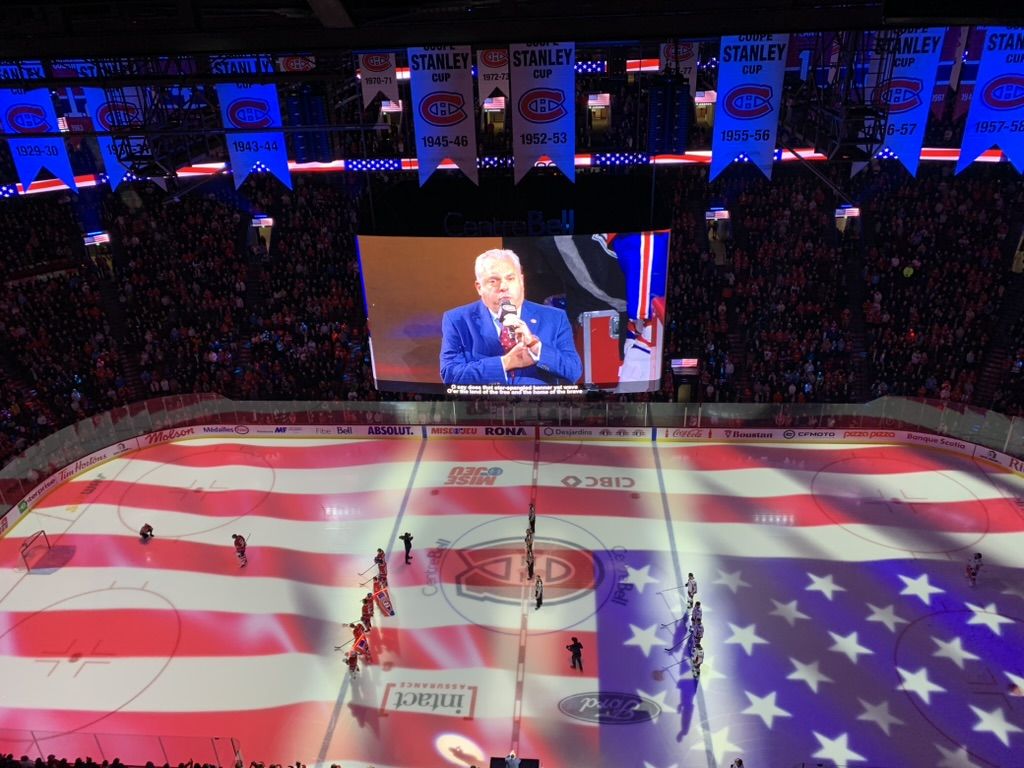
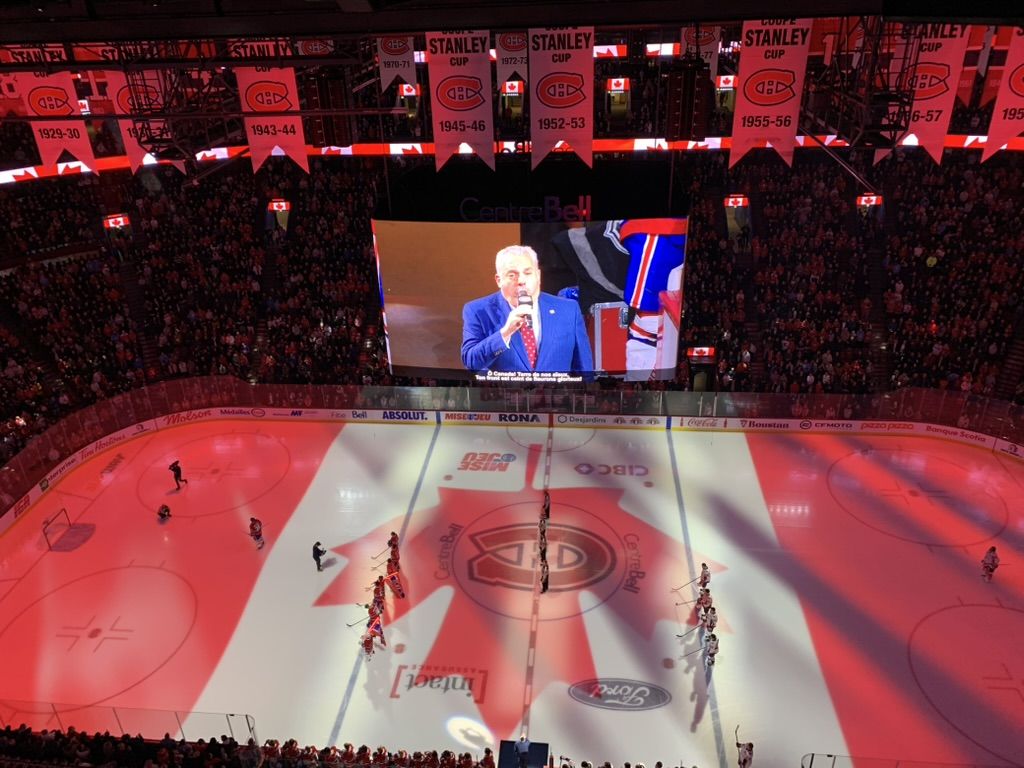
When performing the anthems, he adheres to the protocols of each country of which he is a citizen: as an American, he covers his heart when singing The Star-Spangled Banner; his hands are at his sides for O Canada.
Photograph — Jason Paperman
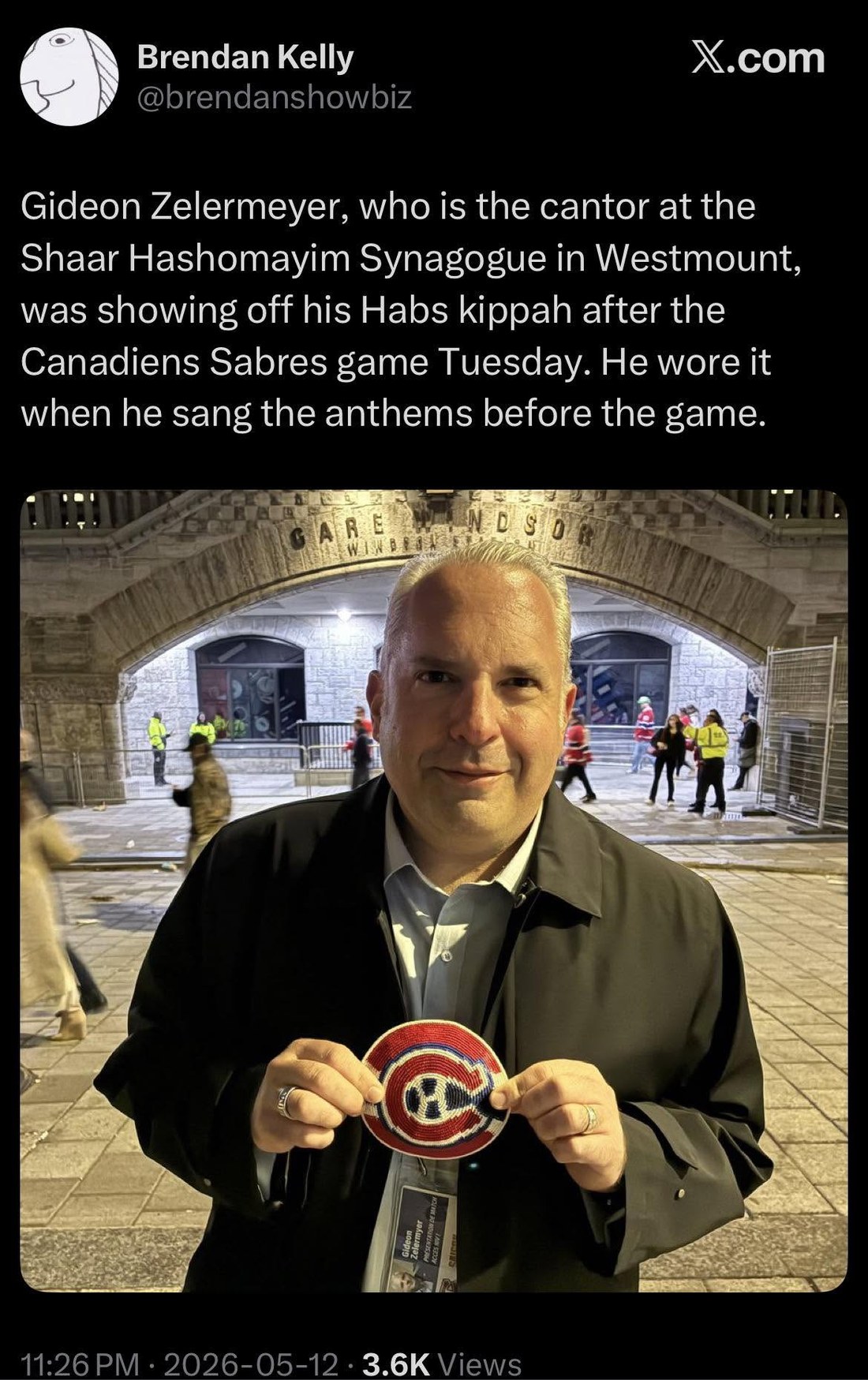
Bell Centre, 12 May 2026 — Game 4, second round, against Buffalo. His first playoff anthem, after more than a decade of regular-season nights.
“If you can sing Kol Nidre at The Shaar, you can do this. There's no pressure.”
Canadian Jewish News, December 2010
Two anthems, one voice, beneath the Stanley Cup banners.
“One of my greatest honours is to be able to sing at the Bell Centre and do the national anthems for the Canadiens' games — especially when it involves both my home and my native land.”
Seven nights
16 Nov 2010
The Cantor and The Flower
On the first night Zelermyer was anthem singer, Guy Lafleur was in the tunnel by the Habs dressing room. Lafleur asked whether he was a friend of a certain congregant, then explained that he hadn’t planned to come at all, but that congregant had phoned that afternoon and told him he ought to hear the new singer. No pressure.
He sang The Star-Spangled Banner first, then O Canada. It felt like the whole congregation was in the building; his wife Michelle and their two-year-old son were behind the penalty box. The Canadiens won 3–0. For a week afterwards the calls and messages did not stop.
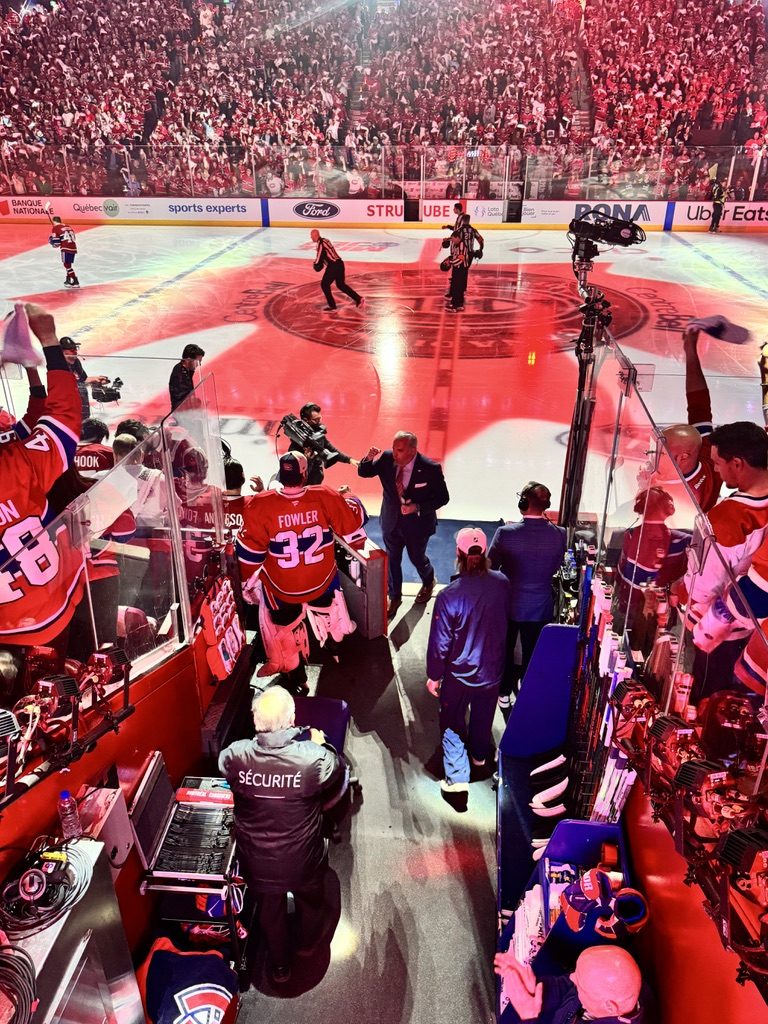
Photograph — Gerry Shapiro
The walk back — past the bench, the camera crane and the security detail. The same few yards where Guy Lafleur stood.
3 Mar 2016
The road game
One of these nights was not booked by Montreal at all. At an NHL road game the home club chooses the singer, and the Kings brought him to Staples Center for a Canadiens game in front of 18,230 people. It came about through a friend in Los Angeles who had spent part of his childhood in Montreal. Like the debut six years earlier, it arrived through the community rather than through an agent.
22 Mar 2021
The night that was called
He was dressed and ready. Roughly twenty minutes before the scheduled faceoff, the league postponed the game — two Canadiens had entered COVID protocol, and it became the first postponement in the all-Canadian North Division. He sang eight days later instead, a 4–0 win, into an arena with no spectators in it at all.
2011–2021
Fenway Park — home and native land
Fenway happened by accident. A friend who works at Paperman & Sons heard the first Bell Centre anthems in November 2010, sent a recording to a friend of his who was assistant head groundskeeper at Fenway Park, who passed it up to management.
Photograph — Heske Zelermyer
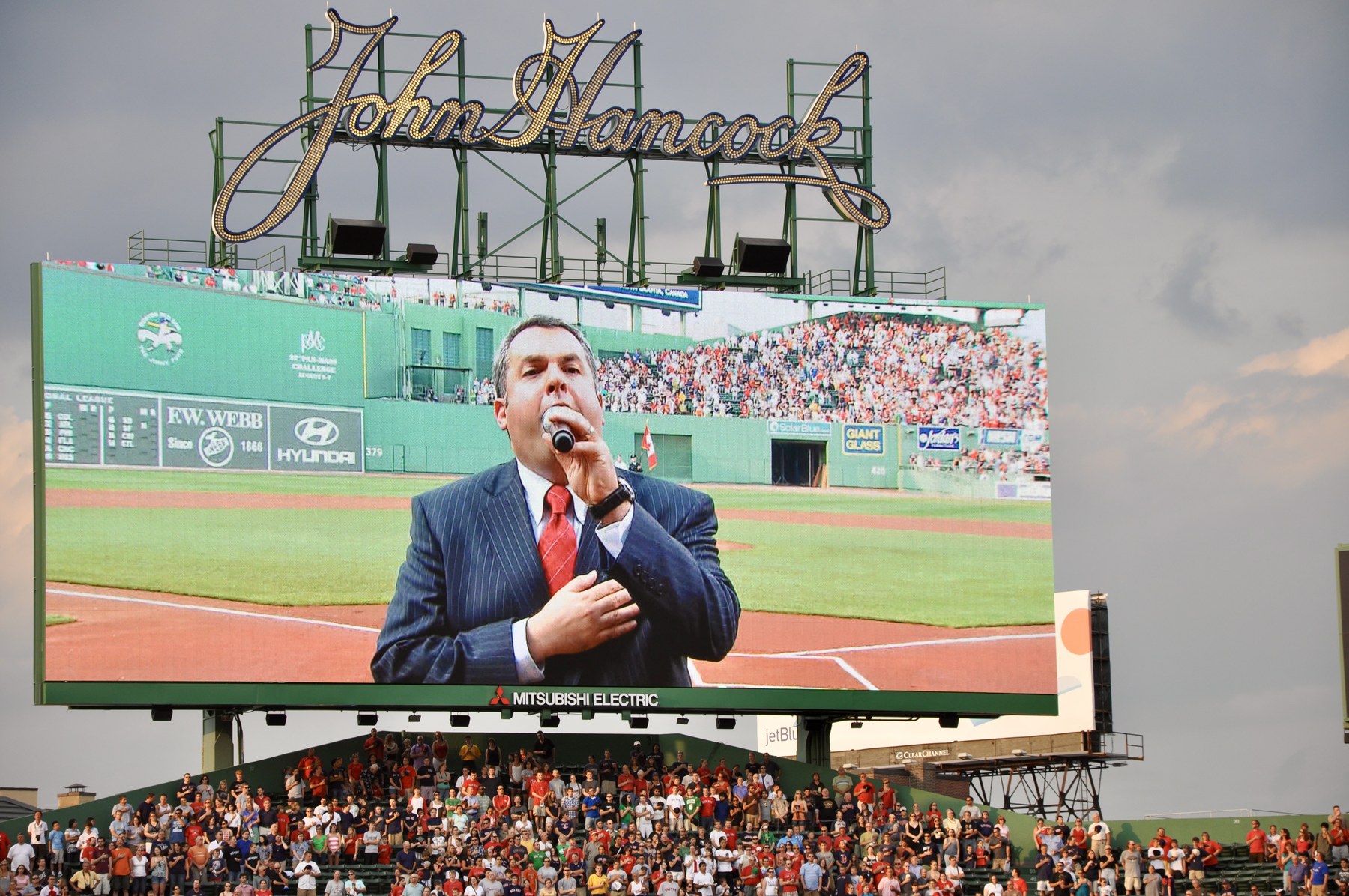
Fenway Park, 5 July 2011 — the first of them, forty feet high under the John Hancock sign.
Every one of his five appearances there has been a Red Sox game against that team from Toronto. The pattern is not a coincidence: when the Blue Jays are in town, the Canadian anthem needs to be sung, and sung properly. The Sox are 4–1 in those games.
Walking onto the field at Fenway is the baseball equivalent of stepping on the ice at the Old Montréal Forum. You are walking where Babe Ruth and Ted Williams and every other baseball hero has walked since the week that the Titanic sank. The first time he walked through those gates was with his father and brother — he was five years old.
Photograph — Ben Zelermyer
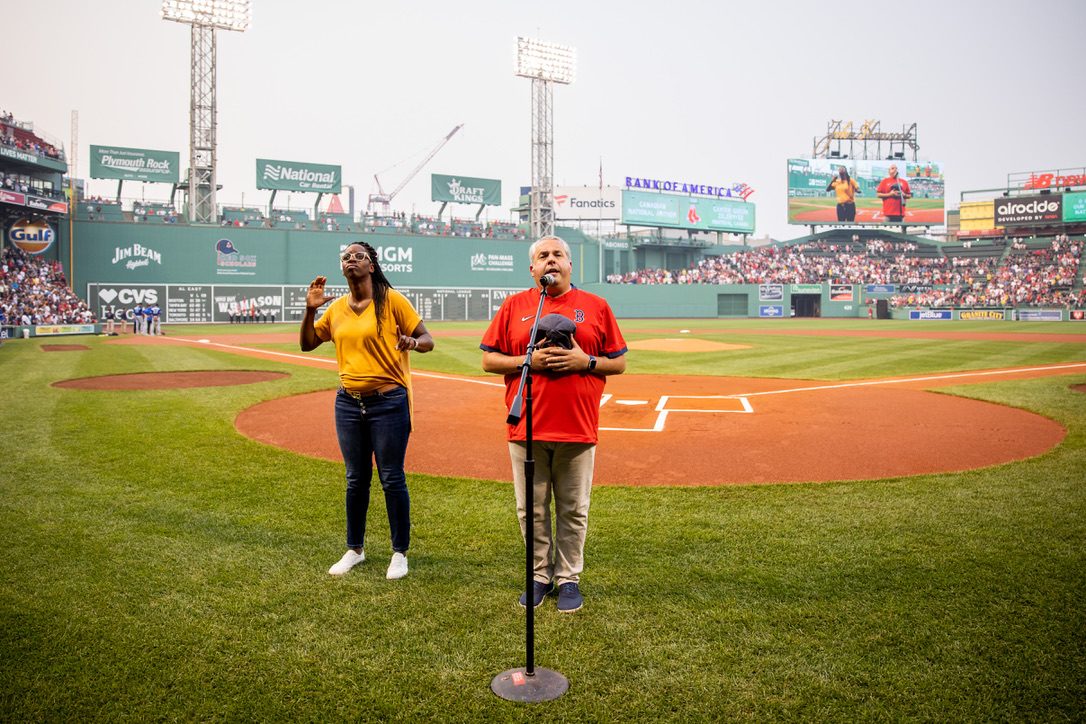
Fenway Park, July 2021 — his fifth appearance there, and his fifth against Toronto. Cap over the heart, kippah on.
After more than a decade of regular-season anthems, his first playoff game: Game 4 of the second round against Buffalo. Montreal lost 3–2 on a dump-in that took a wild bounce off the boards, then went on to win the series in seven and reach the Conference Final.
He wears it every day, so he wears it at centre ice, and at the end of the anthems he bows his head — which is the moment you can see it. That was true long before Quebec's Bill 21 barred teachers, judges, police officers and government lawyers from wearing religious symbols at work. Since the law passed, he has said, the same act has carried a little more weight: “I don't do it to make a statement, but I'm proud of the fact that by my very presence I am.”