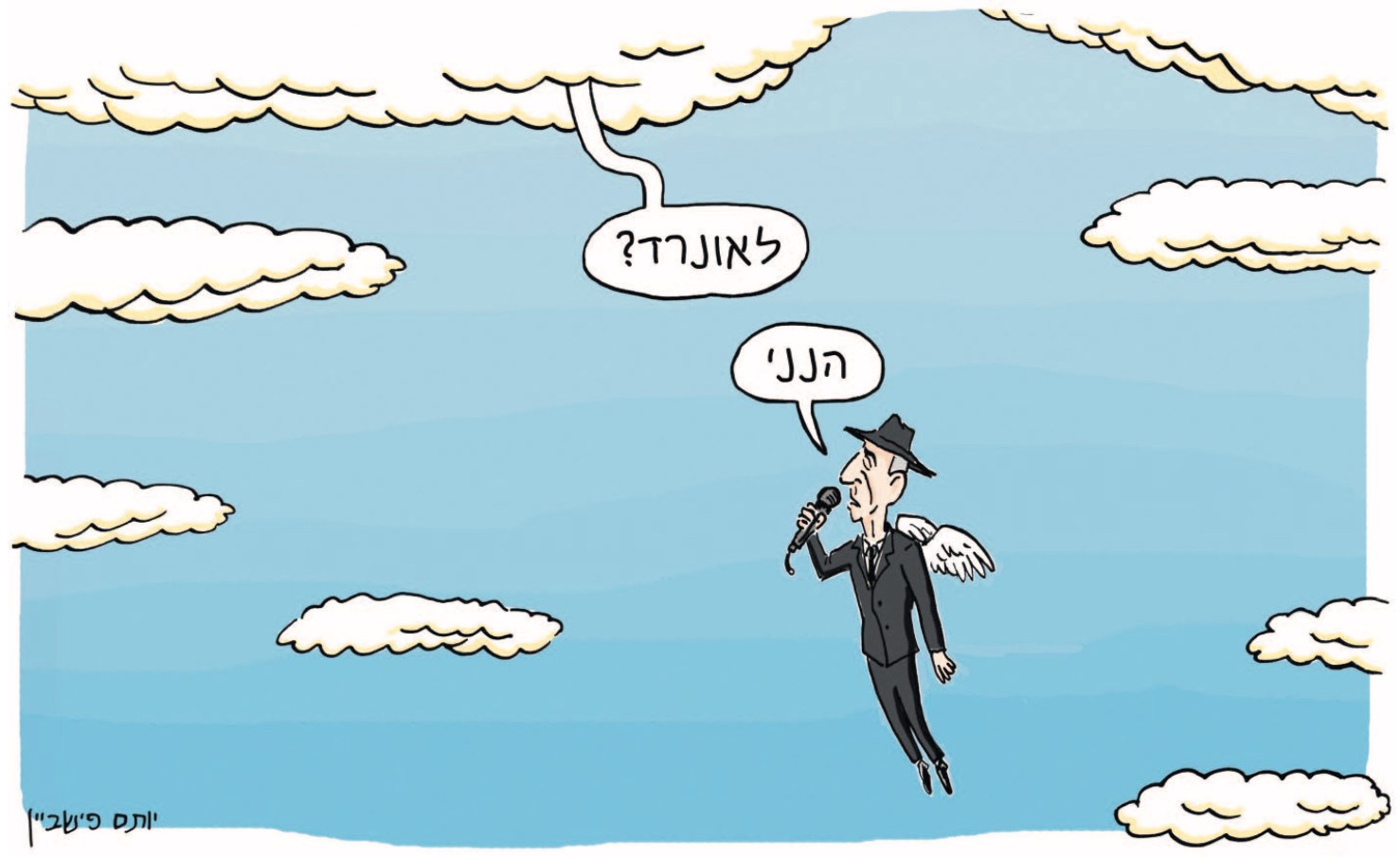
הִנֵּנִי
Hineni
Here I am.
Abraham's answer when God calls him. It is the biblical and liturgical word that Leonard Cohen used as the chorus of the first song on his last album, and it is Gideon Zelermyer's voice singing it — the cantor of the synagogue Cohen's grandfather and great-grandfather had led, in the city where he was born and would be buried. They had been writing to each other since 2009.
2009–2016
Seven years of letters.
A reply, some years into the correspondence
May your voice reach that Place
Leonard Cohen
and bring down the blessings.
Cohen capitalised Place. הַמָּקוֹם — HaMakom, The Place, is one of the names of God. The second line is the return journey. In thirteen words, he had described the office of the shaliach tzibbur — the emissary of the congregation, who carries their prayer up and brings the blessing back down — more precisely than most prayer books manage.
A member of Cohen's family sent him the recordings of the synagogue's music — the choir he had grown up hearing, still singing every week in the building his grandfather built. That is how he came to know the work of its cantor. The two men began corresponding in 2009 and kept it up for years.
The letters were mostly holiday greetings. The line above came in reply to one sent before the High Holy Days. Zelermyer's response to it: he had never heard anyone distil into a handful of words what a cantor actually does.
Cohen signed every message the same way — Fraternally, Eliezer, using his Hebrew name.
Then, in November 2015, an email arrived asking whether he would be interested in collaborating on a new record. Cohen wrote that he was looking for the sound of the synagogue cantor and choir of his youth.
Zelermyer woke early, read it, shouted loudly enough to wake the house, and wrote back with two Cohen song titles: “Hallelujah, I'm your man!”
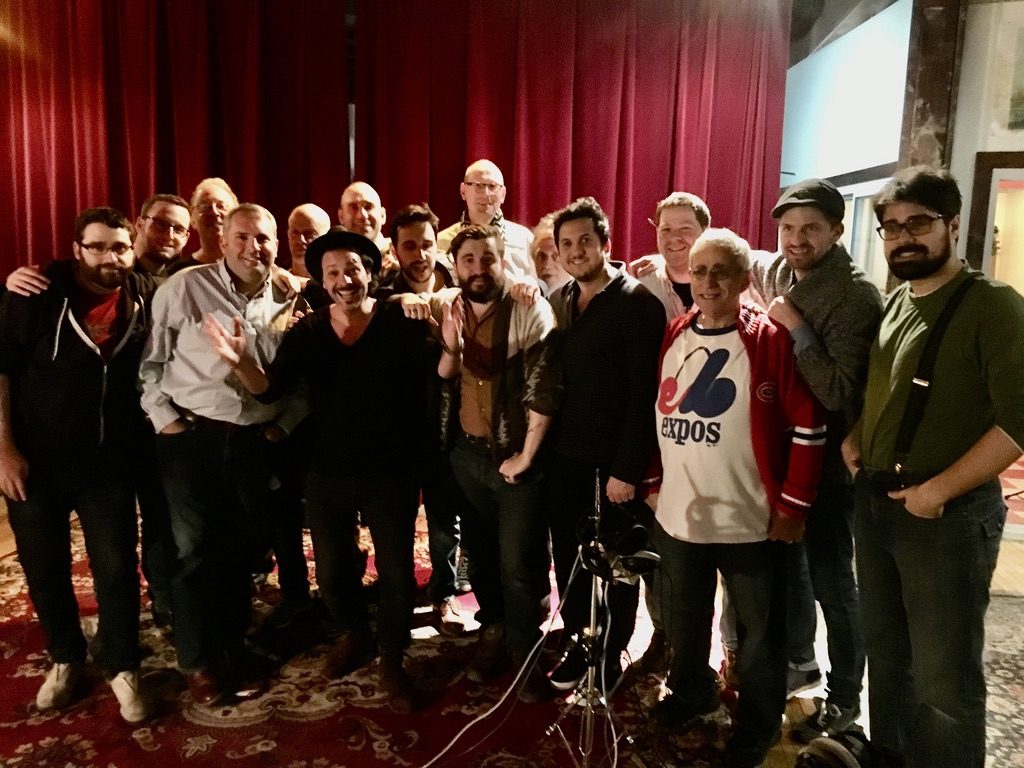
From Los Angeles came a rough track: Cohen's voice and a keyboard. Neither Zelermyer nor Shaar Director of Music Roï Azoulay knew what Cohen wanted, so they developed several possible versions, recorded each with the choir, and sent them all back for Cohen and his team to choose from. Within three weeks the choir was in a studio on the Plateau with Adam Cohen producing, working until two in the morning. Zelermyer has called it the most iconically Montreal night of his life.
The cantorial improvisation at the close of You Want It Darker was Zelermyer's own, offered during the sessions and kept in the final mix.
On It Seemed the Better Way, the team set a violin motif against the melody of the Priestly Blessing — an homage to Cohen being a Kohein.
He had asked Adam the obvious question — his father could get this kind of singing from anyone, so why come here? The answer: “Because The Shaar means a lot to Leonard.”
“I am pleased that my enduring association with The Shaar be known to the Congregation, and that our work together reflects our love for the place, the people, and the tradition.” Leonard Cohen
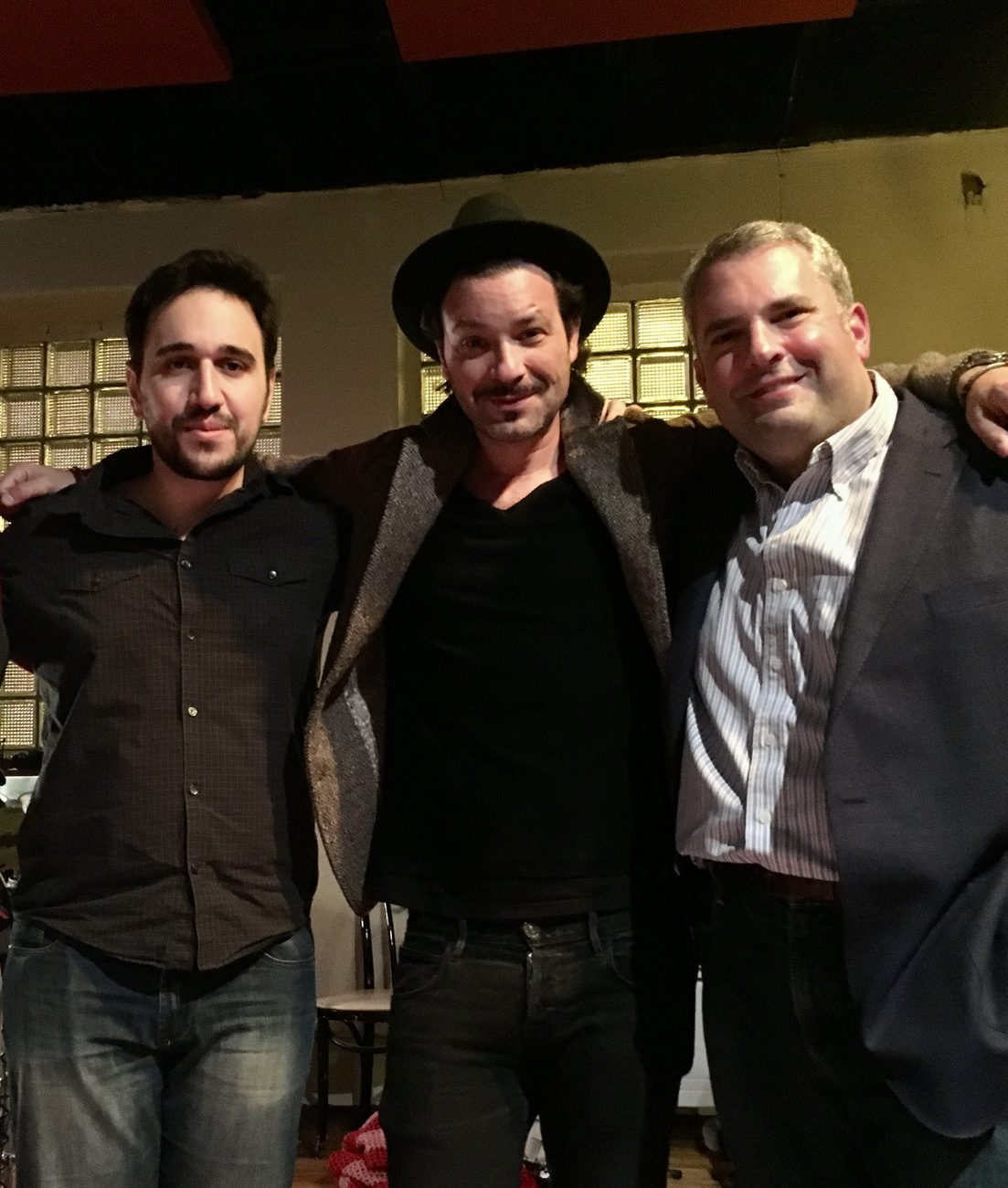
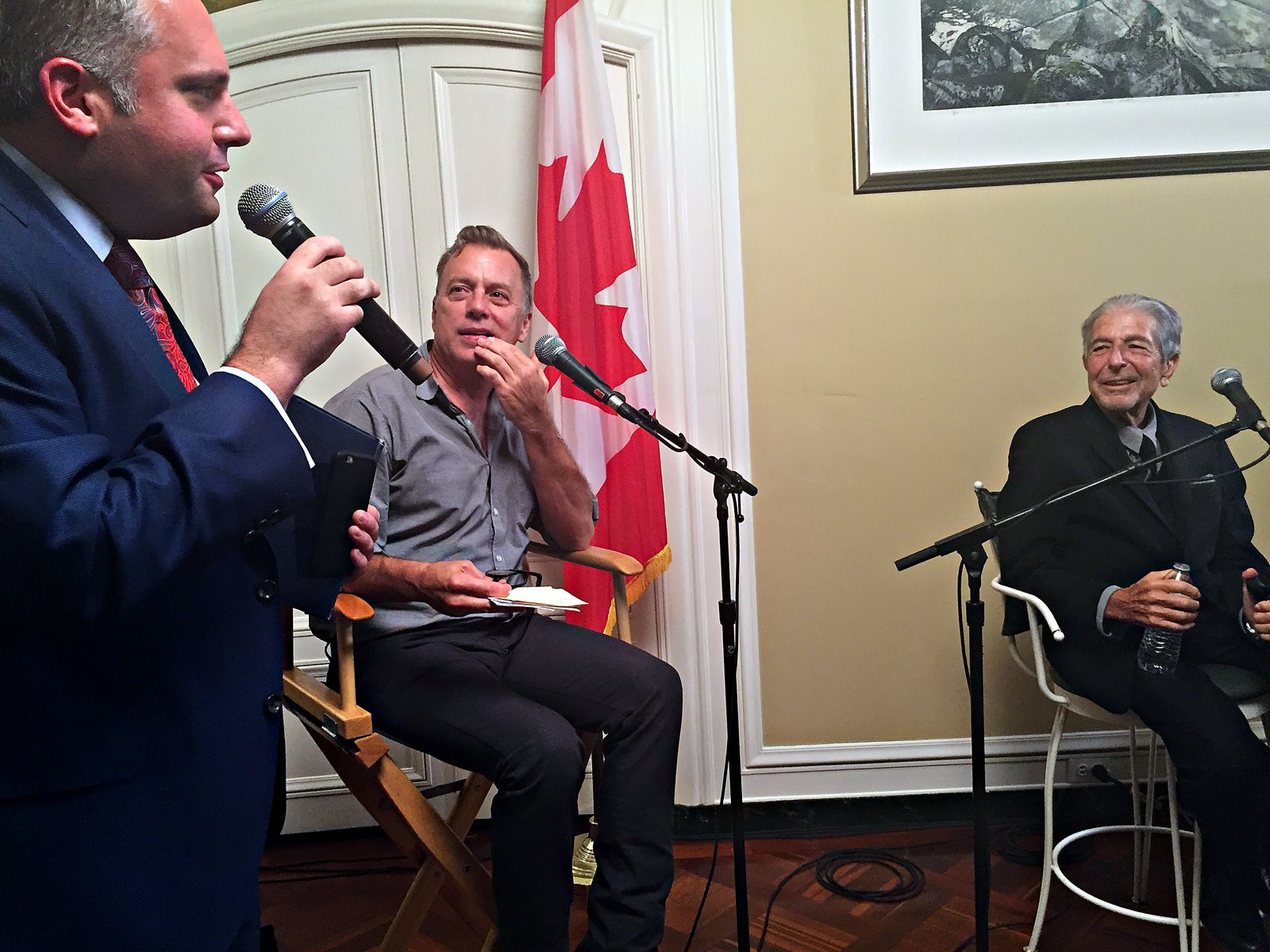
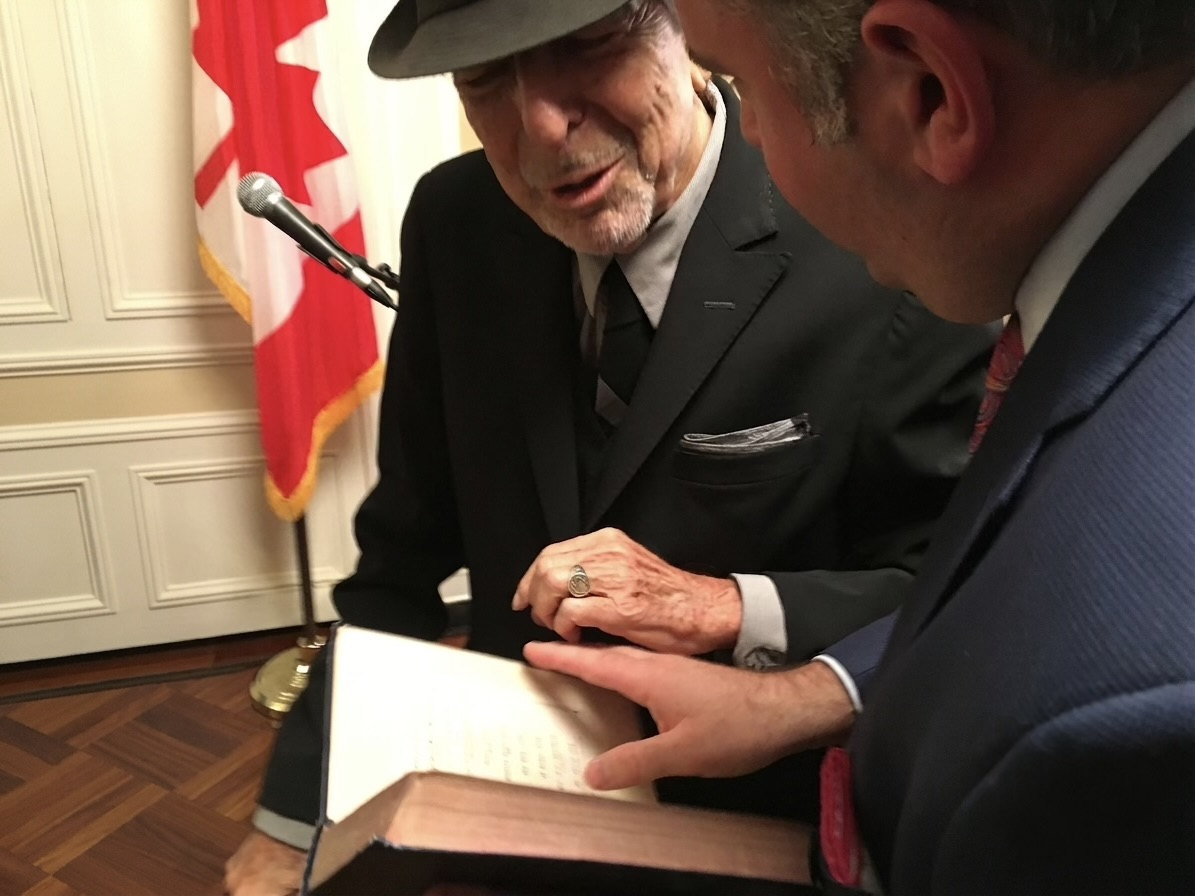
These are the only photographs of that night.
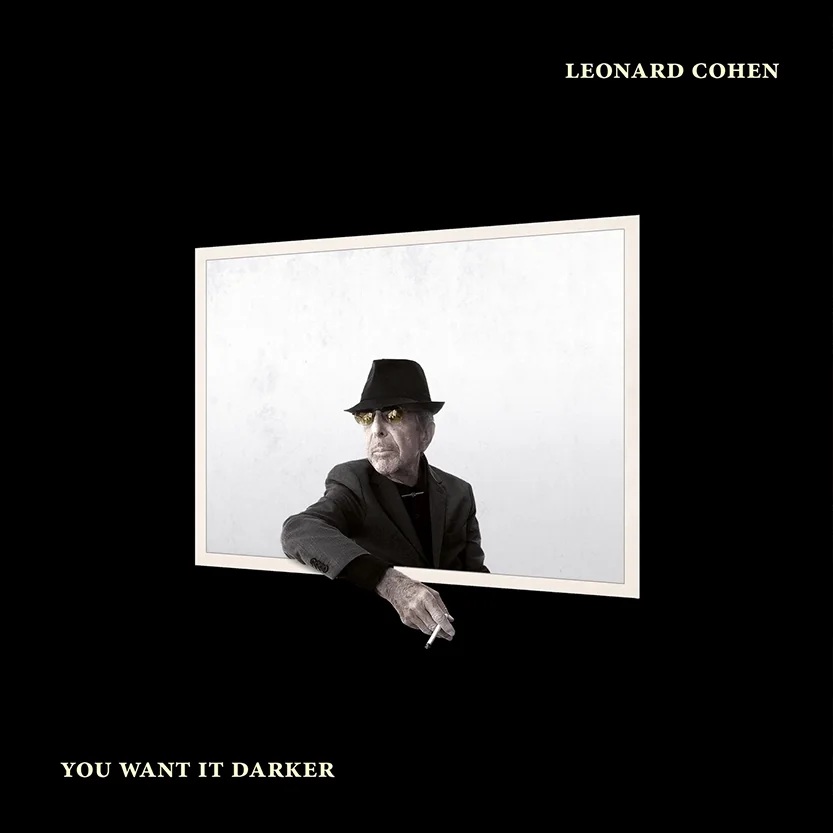 You Want It Darker (2016)
— title track, soloist
— It Seemed the Better Way, soloist
JUNO · Album of the Year, 2017
Two trophies — one at home, one at the synagogue.
GRAMMY · Best Rock Performance, 2018
Leonard Cohen's award, on which Zelermyer sang as soloist. He holds a certificate of participation from the Recording Academy.
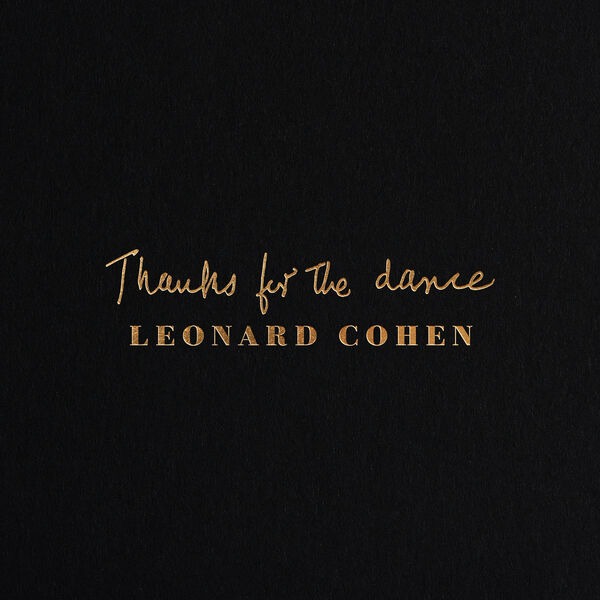 Thanks for the Dance (2019)
— Puppets, men's choir
GRAMMY NOMINATION
Best Folk Album, 2021
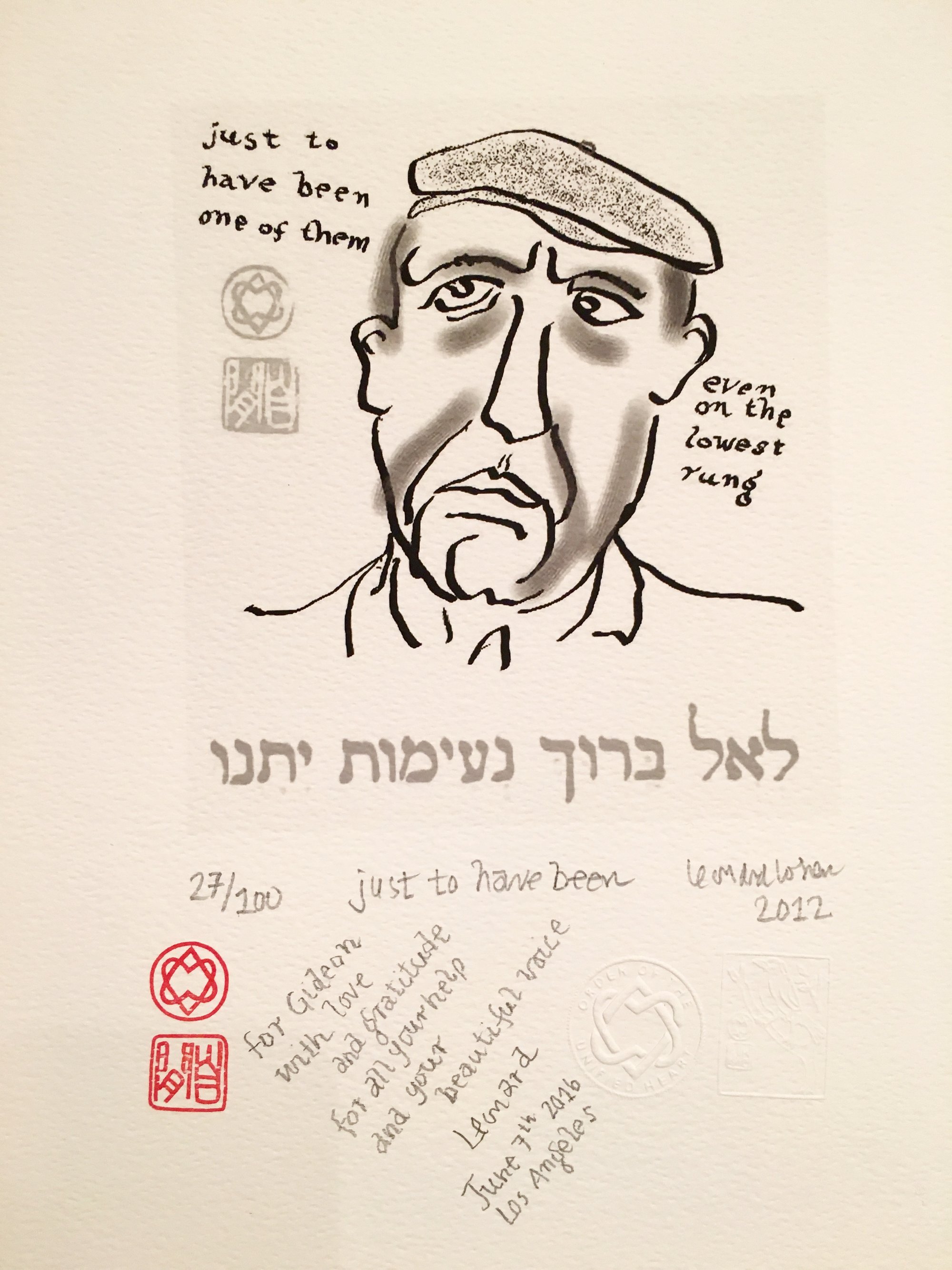
7 June 2016 · Los Angeles
Just to have been one of them
In gratitude for Zelermyer's role on the recording, Cohen sent a self-portrait and inscribed it.
Across the top of his own face he had written just to have been one of them, and down the side, even on the lowest rung. Beneath the drawing, in Hebrew: לאל ברוך נעימות יתנו — l'Eil baruch n'imot yiteinu, to the blessed God they offer sweet melodies. It is a line from Shacharit, the morning service, describing the heavenly hosts who sing before God.
So Cohen drew himself beneath a line about the singers who offer sweet melodies, said he would settle for being the least of them, and sent it to the man who sings that line every week. Cohen made many self-portraits, but he knew that this was the only one to give to the cantor of his family's synagogue.
His use of “rung” is deliberate and makes this particular inscription a biblical allusion. Cohen yearns to be one of the angels, even on the lowest rung of Jacob's ladder. In the biblical narrative (Genesis 28:16–17), Jacob awakens from his dream, incredulous that he did not realize that God was in this place, and so he names it “Shaar Hashomayim, the Gate of Heaven.” If you know, you know.
Three occasions
In the same space
They were together in the same space three times.
At a 2009 concert in Ottawa, in seats that Cohen had insisted on giving to Zelermyer and Rabbi Adam Scheier. The request had specified that they wished to buy them. Cohen left comps at will-call for his rabbi and cantor, and when pressed, said that given his connection to the shul, he was more than happy to gift them. Zelermyer asked where a donation might go in Cohen’s honour. The response: “any soup kitchen, the closer to home the better.”
At the launch of You Want It Darker in Los Angeles in October 2016, photographed below. When Cohen was asked to speak about the involvement of the Shaar Hashomayim choir in You Want It Darker, he asked for Zelermyer to answer the question instead. He brought Cohen a meaningful Shaar memento: a Yom Kippur machzor that had been given to Cohen’s late sister, Esther, at her Synagogue Religious School graduation.
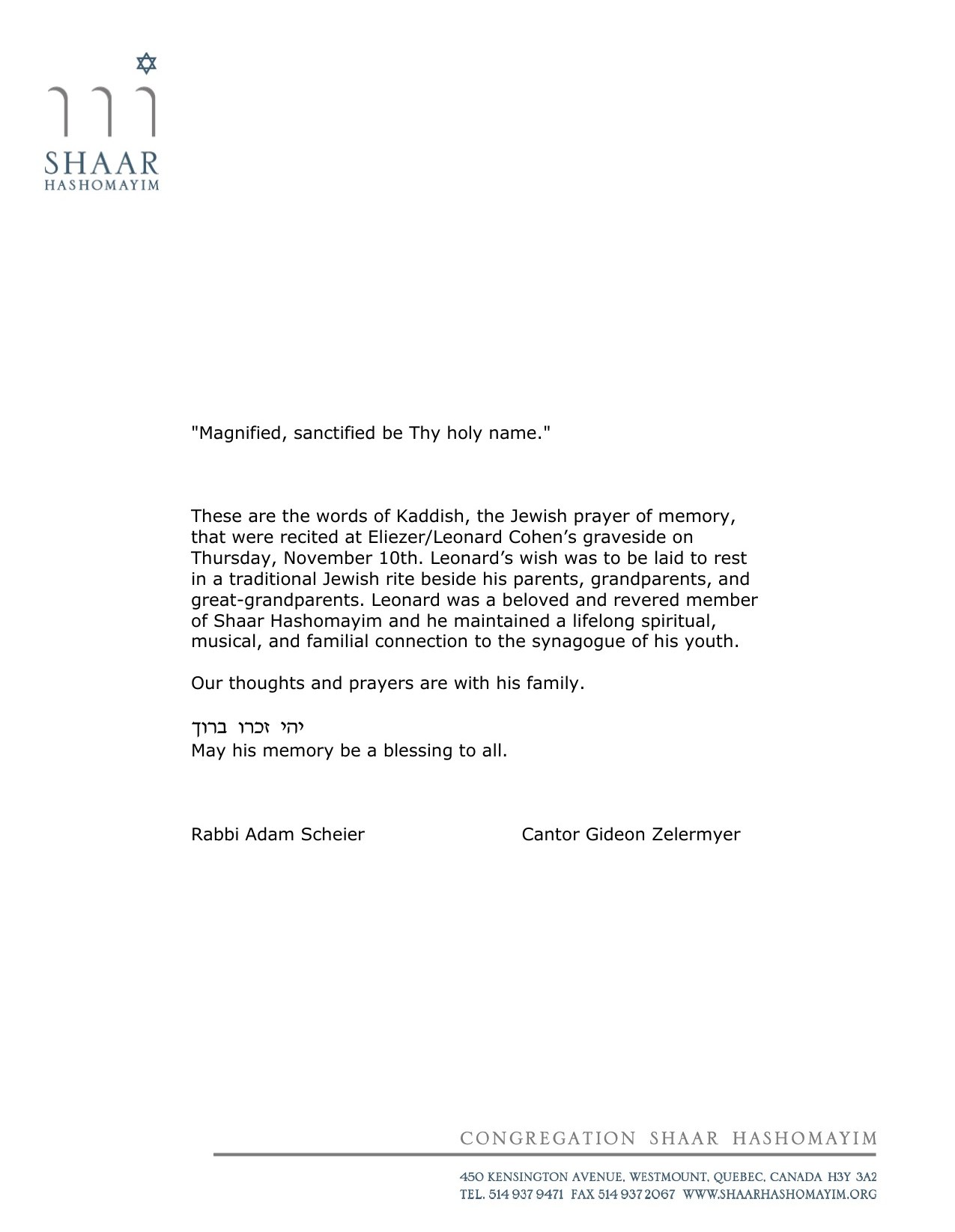
On 10 November of that year, at the Shaar Hashomayim Cemetery.
Thursday
10 November 2016
Cohen had died on the Monday. The news was not made public until Thursday evening. In between, there was a funeral to conduct and a concert to sing, and nothing that could be said about either.
Zelermyer officiates at Leonard Cohen's private funeral, in accordance with Cohen's wishes: a traditional Jewish rite, in the Shaar Hashomayim cemetery, beside his parents, grandparents and great-grandparents.
He misses the dress rehearsal for that evening's concert. The conductor is not pleased. He cannot say why.
The Unsung: Women Wartime Heroes, including the world premiere of Cantata for the Unsung.
From the stage he watches the audience check their phones, one after another, and understands that the news has broken.
A line of people outside his office, waiting to console him. He has to act as though he is hearing it for the first time.
A statement.
The stone in the cemetery is engraved אליעזר בן ניסן הכהן — Eliezer ben Nisan HaKohein — and beneath it, the name by which the world knew him.
Two months earlier, before Rosh Hashanah, Cohen had written asking him to visit his parents' graves. Zelermyer went, put in a good word, laid a stone, and sent a photograph. Cohen's reply: that picture, and your visit, are precious to me.
And on Simchat Torah, weeks before the end, the choir sang its annual irreverent setting of Adon Olam — a tradition that has taken in Gershwin, Rodgers and Hammerstein, Star Wars and Frozen. That year they used Tower of Song. Zelermyer sent Cohen the choral arrangement with a note explaining it. The answer came back within hours, in Hebrew: Chazak, chazak v'nitchazeik — be strong, be strong, and let us strengthen one another. The words a congregation says together on finishing a book of the Torah.

They were the last words the two men exchanged.
The Globe and Mail · 18 November 2016
Leonard Cohen’s Temple of Song
Eight days after the funeral, Zelermyer wrote his own account of the seven years: the invitation, the emails, the graves on Mount Royal, the last words.
“My first response was an ecstatic scream, followed by a feeble attempt to appear nonchalant by writing back ‘Hallelujah! I’m your man!’” On the invitation, November 2015
It is the fullest telling anywhere on this site, in his own words — including the concert tickets Cohen refused to let his rabbi and cantor pay for, asking instead that a donation go to “any food bank, the closer to home the better”; and the question he kept returning to afterwards.
“Leonard Cohen could go to anyone in the world for some male backing vocals. Why did he contact Shaar Hashomayim?”
The Globe and Mail
18 November 2016
WRITTEN
Eight days after the funeral,
eleven after the death
ALSO IN IT
Hineni and the Akeidah
The Kaddish in the title track
Simchat Torah, and Tower of Song
Chazak, chazak v’nitchazeik
The original at the Globe
2016–2017
Afterwards
On the Shabbat after his death, Zelermyer chanted El Malei Rachamim, the memorial prayer, to the tune of Hallelujah.
A month later, Cohen's family brought him and the Shaar Hashomayim choir to Los Angeles to sing at the memorial service.
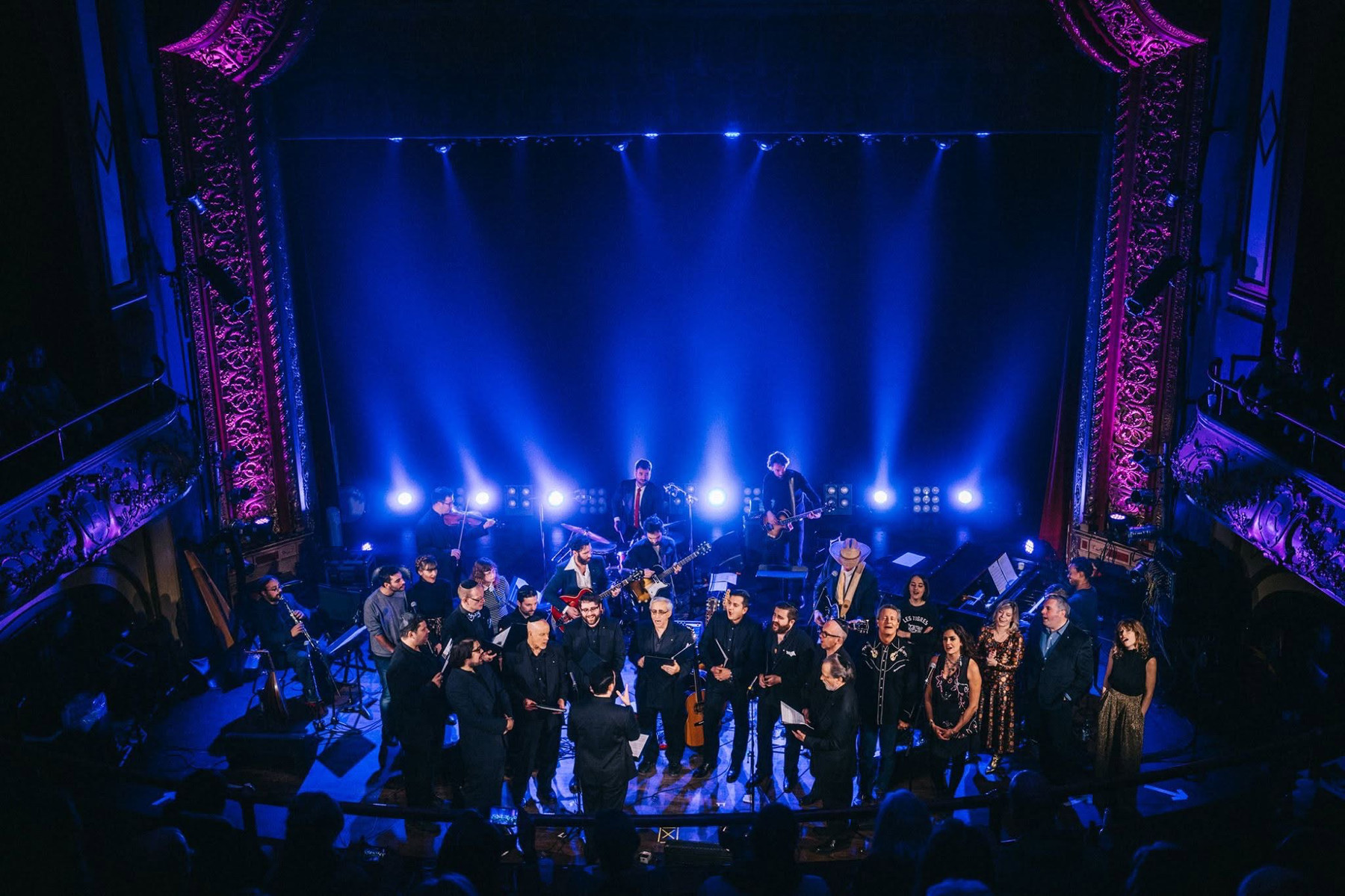
Then a year of tributes. In December 2016, at the Rialto Theatre, God Is Alive, Magic Is Afoot: A Montreal Tribute to Leonard Cohen — sold out within days of being announced — where the choir sang You Want It Darker and an a cappella If It Be Your Will, chosen for the religious depth of its words.
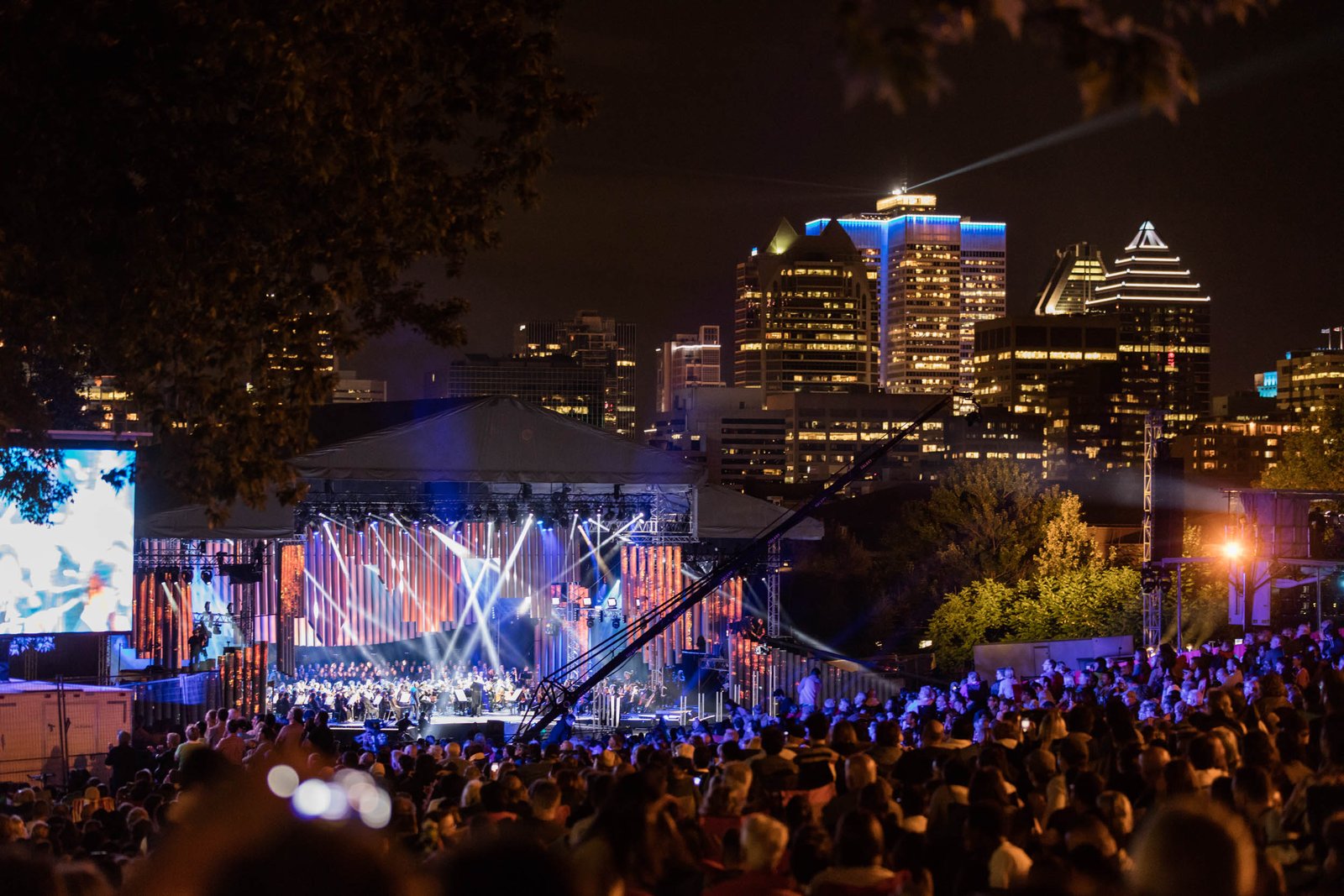
In August 2017 came Montréal Symphonique, the free concert at the foot of Mount Royal for the city's 375th anniversary. It brought the Orchestre symphonique de Montréal, the Orchestre Métropolitain and the McGill Symphony Orchestra onto one stage for the first time — some three hundred musicians under Simon Leclerc — and included a tribute to Cohen. The police put the crowd on the mountain at eighty thousand, with thousands more in parks across the city. Watch the performance.
The day before, two busloads of Cohen readers — from the Netherlands, Germany, Ireland, Andorra and Cyprus — came to the synagogue of his youth. Zelermyer stood in the sanctuary and told them the whole of it: the letters, the record, the choir. Listen to the talk, published by The New York Times.
And on the first anniversary of his death, Tower of Song at the Bell Centre before nearly sixteen thousand. Twenty-two songs, a twenty-five-piece orchestra, and a bill that included Sting, Elvis Costello, k.d. lang, Lana Del Rey, Feist, Ron Sexsmith, The Lumineers, Damien Rice, Courtney Love, Sharon Robinson, Patrick Watson, Basia Bulat, Cœur de Pirate and Adam Cohen, with filmed contributions from Céline Dion, Peter Gabriel, Chris Martin and Willie Nelson.
Sting came back near the end for Anthem — there is a crack in everything, that's how the light gets in. Then the men of the Shaar Hashomayim choir came out in their kippot and sang You Want It Darker against Cohen's own recorded voice, the words projected on the wall behind them. They closed the programme.
They had not been on the announced bill. The Gazette's guide to the evening, published three days earlier, had explained the Cohen connection of eighteen performers and mentioned no choir.
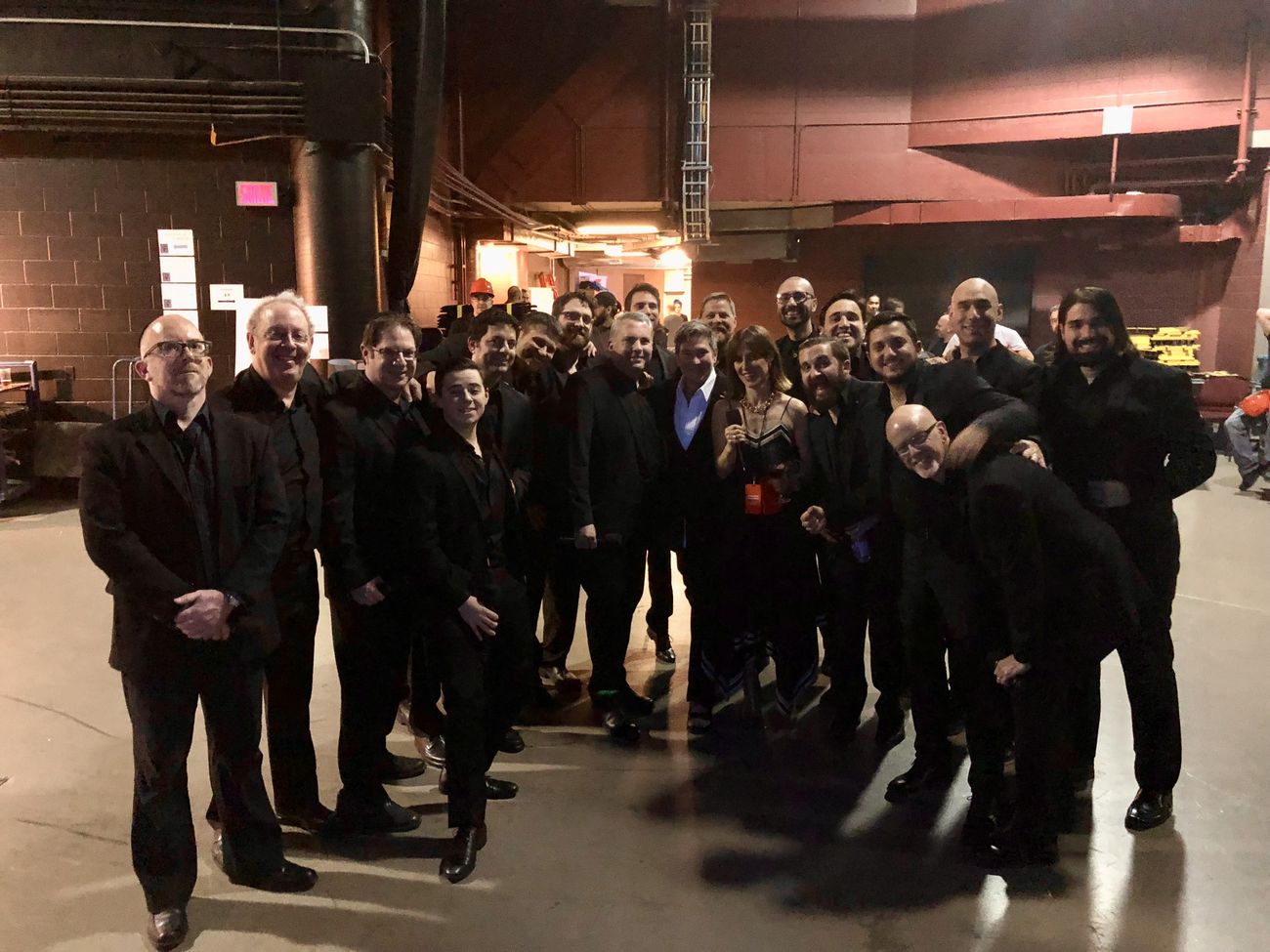
“He came into the world a Montreal Jew and he left the world a Montreal Jew.” JTA, April 2018
December 2016 · Montreal
You Want It Darker
If It Be Your Will
MONTRÉAL SYMPHONIQUE
19 August 2017
Foot of Mount Royal
c. 80,000 on the mountain
Watch
IN THE SANCTUARY
5 November 2017
Leonard Cohen Forum pilgrimage
Listen
TOWER OF SONG
6 November 2017
Bell Centre, Montreal
c. 16,000 in attendance
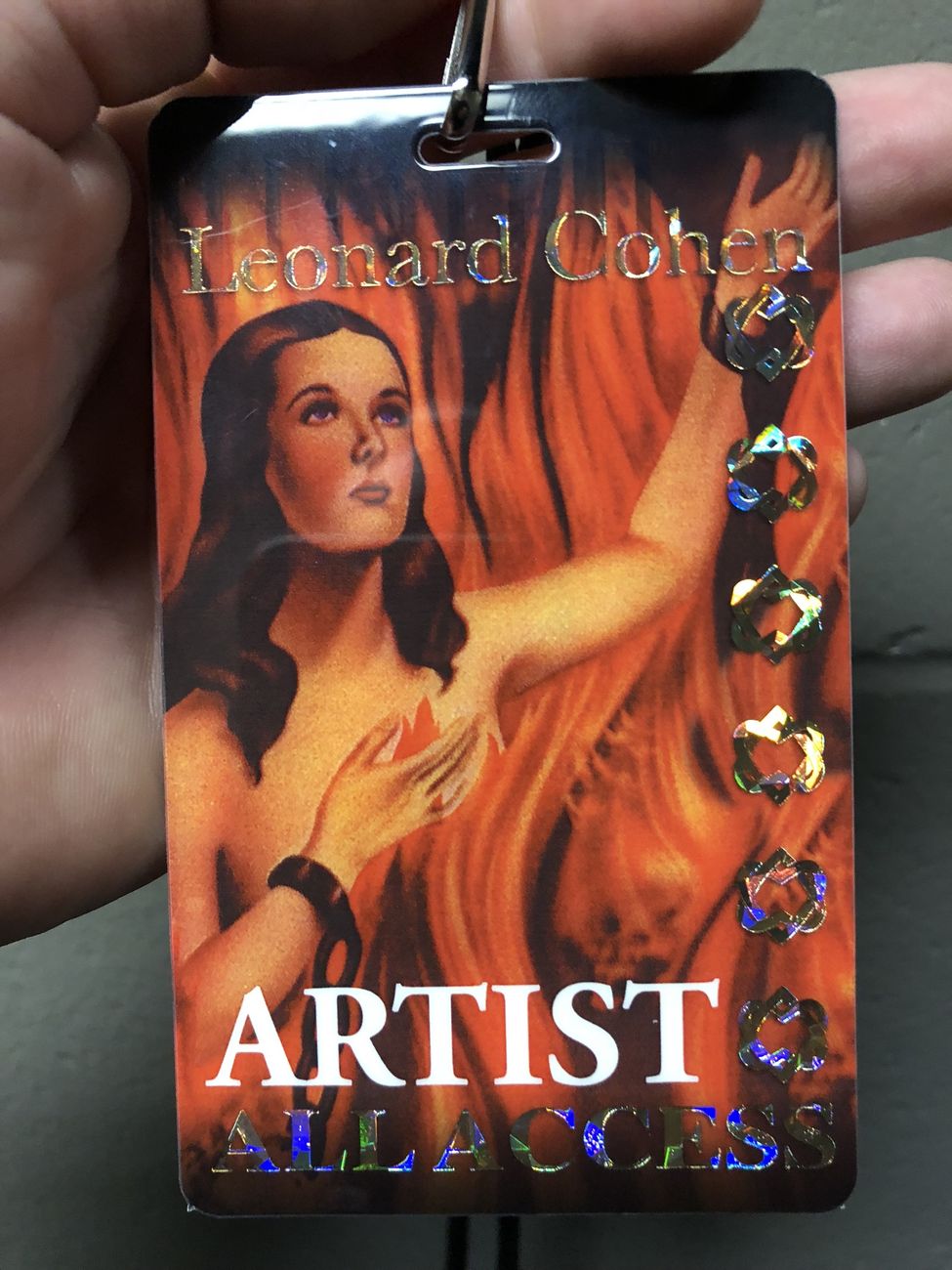 Artist, all access.
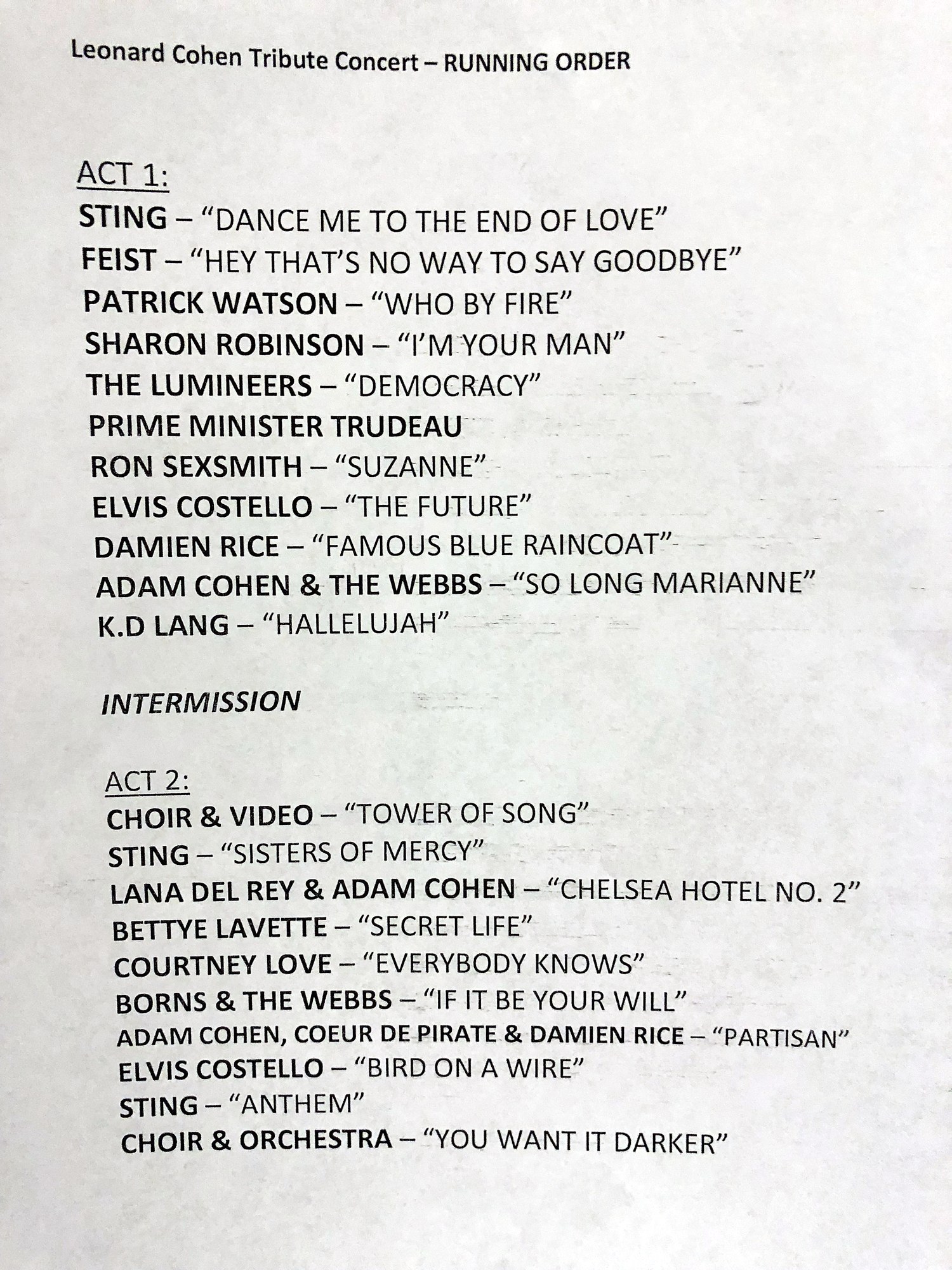 The running order — the choir last.
Broadcast CBC Radio 2,
7 November 2017
CBC Television and
Ici Radio-Canada Télé,
3 January 2018
2017 —
I'm Your Man (A Portrait of Leonard Cohen)
Candice Breitz's nineteen-channel video installation, commissioned by the Musée d'art contemporain de Montréal, gathers eighteen men over sixty-five — lifelong Cohen listeners, every one of them — each filmed singing his own complete rendition of the 1988 album in a Montreal studio. They appear on eighteen body-sized screens suspended in a darkened room.
“I was interested in this moment in life where one starts to look back and contemplate what kind of a life one has lived and what kind of a life one wishes to continue living.” Candice Breitz
The nineteenth channel is the Shaar Hashomayim choir — nine men, projected large and alone in the first room, through which visitors pass to reach the rest. Their fragmented vocals are the album's backing parts, reinterpreted, and with the instruments and the lead voice stripped away they become the thing you listen to. Breitz miked the room as well as the singers, so the recording carries the pages of the score turning and the conductor counting the bars: everything a session normally removes.
The visitor walks through the choir to reach the work. Writing in San Francisco, Genevieve Quick read the whole piece as a generational figure — a chorus of younger men holding up the elders who sing the lead.
Before the arrangements were made, Breitz and Zelermyer met several times to work through whether the idea could be done — whether a synagogue choir could take the backing vocals of a 1988 pop album and sing them as itself. The arrangements, once they came, were by Roï Azoulay and Conor O'Neil.
Zelermyer was present throughout the recording and sings on it, including solo lines that on the original album belong to Sharon Robinson.
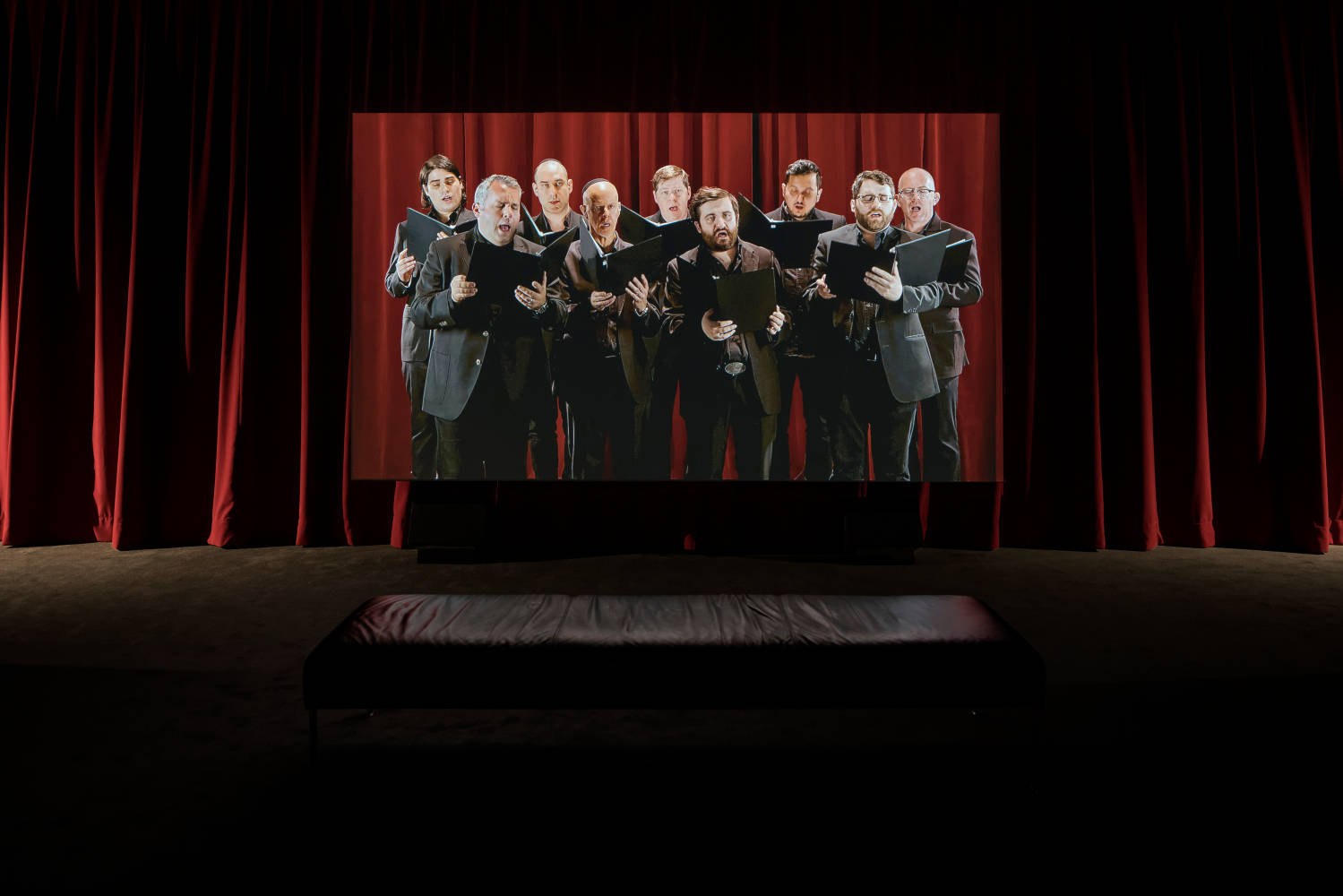
Photograph — Guy L’Heureux
I'm Your Man
(A Portrait of Leonard Cohen), 2017
19-channel video installation
colour, sound
40:43 min, looped
Commissioned by the
Musée d'art contemporain
de Montréal
CHOIR ARRANGEMENTS
Roï Azoulay
Conor O'Neil
ALSO SHOWN
The Jewish Museum, New York
Contemporary Jewish Museum,
San Francisco
Experience Leonard Cohen, 2021–22
Auckland Art Gallery
Toi o Tāmaki
WRITTEN ABOUT
CBC Arts
When you start to look back: 18 older men sing Leonard Cohen's I'm Your Man
48 Hills
Face to face with Leonard Cohen's choir
2019–2026
Museums, stages and conversations
The Jewish Museum, New York
Who Shall I Say Is Calling? A Night of Covers, 20 June 2019. The museum invited three cantors — Zelermyer, Azi Schwartz of Park Avenue Synagogue and Basya Schechter of Romemu — to spend an evening singing Cohen's own songs, as part of the exhibition Leonard Cohen: A Crack in Everything. Not liturgy, and not an account of the recording sessions, but covers, chosen for their engagement with prayer, kabbalah and Jewish inheritance.
He was already in the building: Breitz's installation was part of the same exhibition, so he sang live in a museum where his voice was running on a loop upstairs. The Jewish Museum is under the auspices of the Jewish Theological Seminary — where, twenty-two years earlier, he had been a first-year student training to become a rabbi.
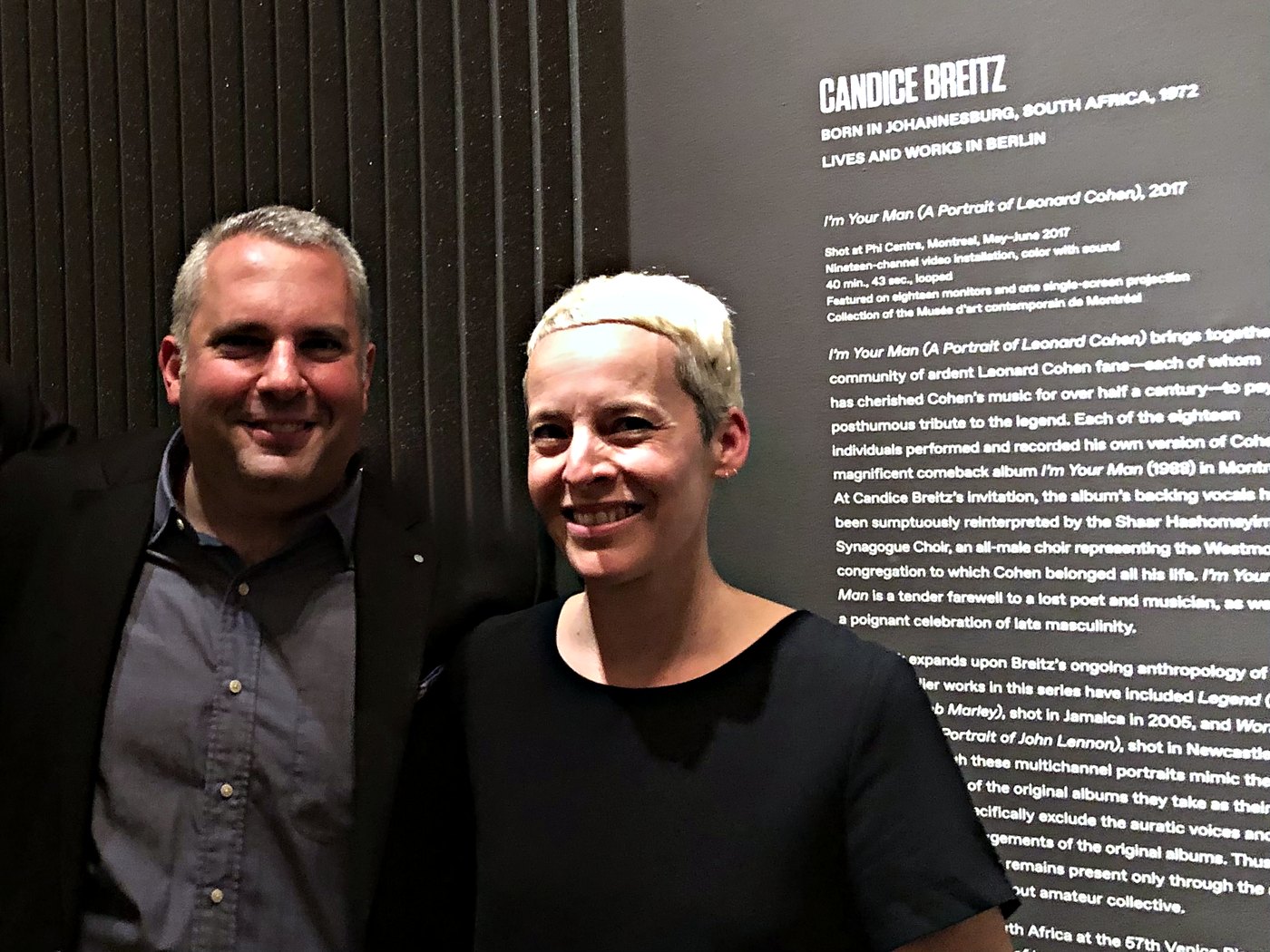
The Streicker Center, Temple Emanu-El, New York
The launch programme for Matti Friedman's Who by Fire: Leonard Cohen in the Sinai — Friedman in conversation with Abigail Pogrebin, with rare photographs from Cohen's 1973 trip to the front. Zelermyer performed You Want It Darker and a selection of Cohen's songs.
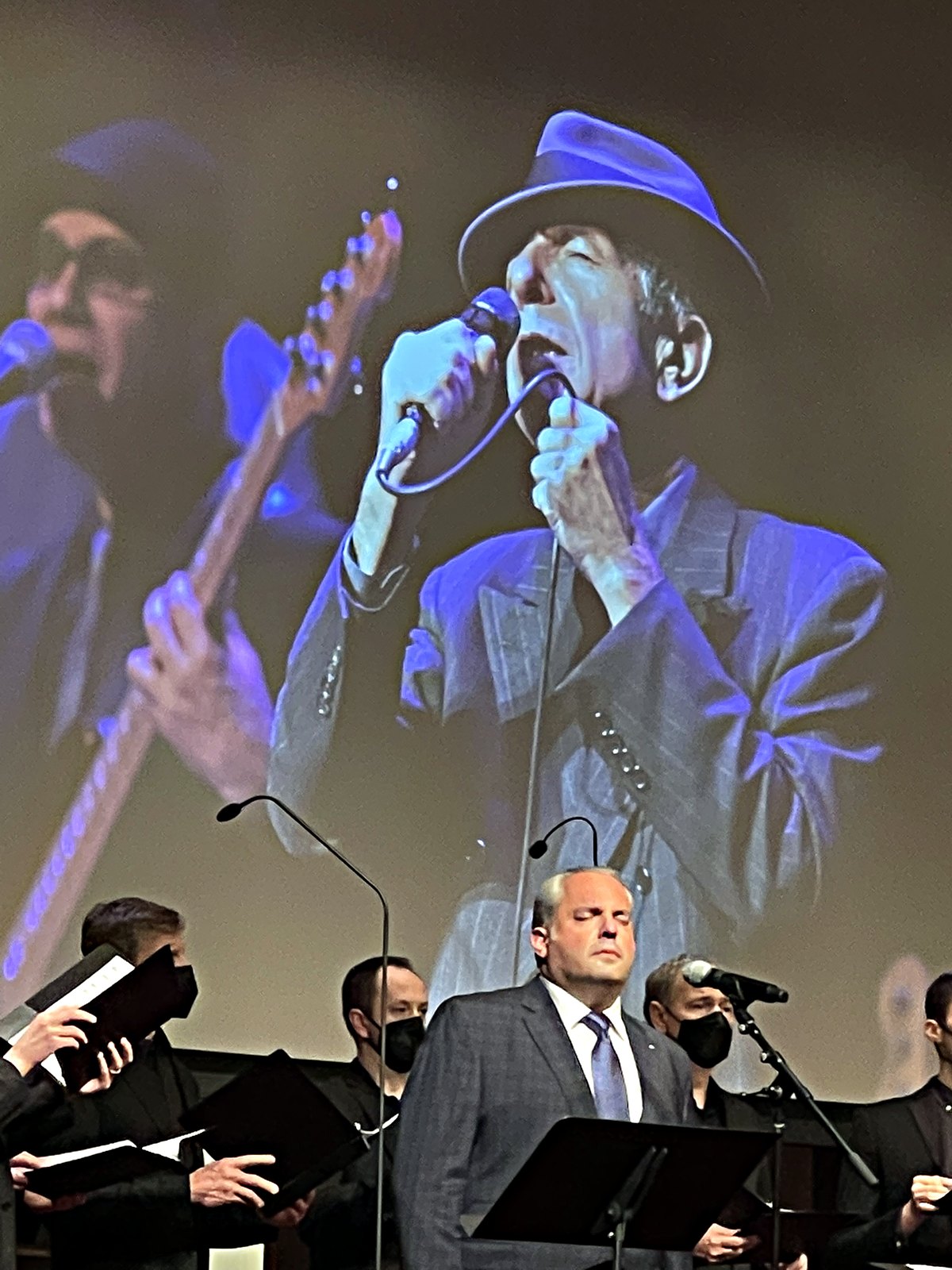
Art Gallery of Ontario
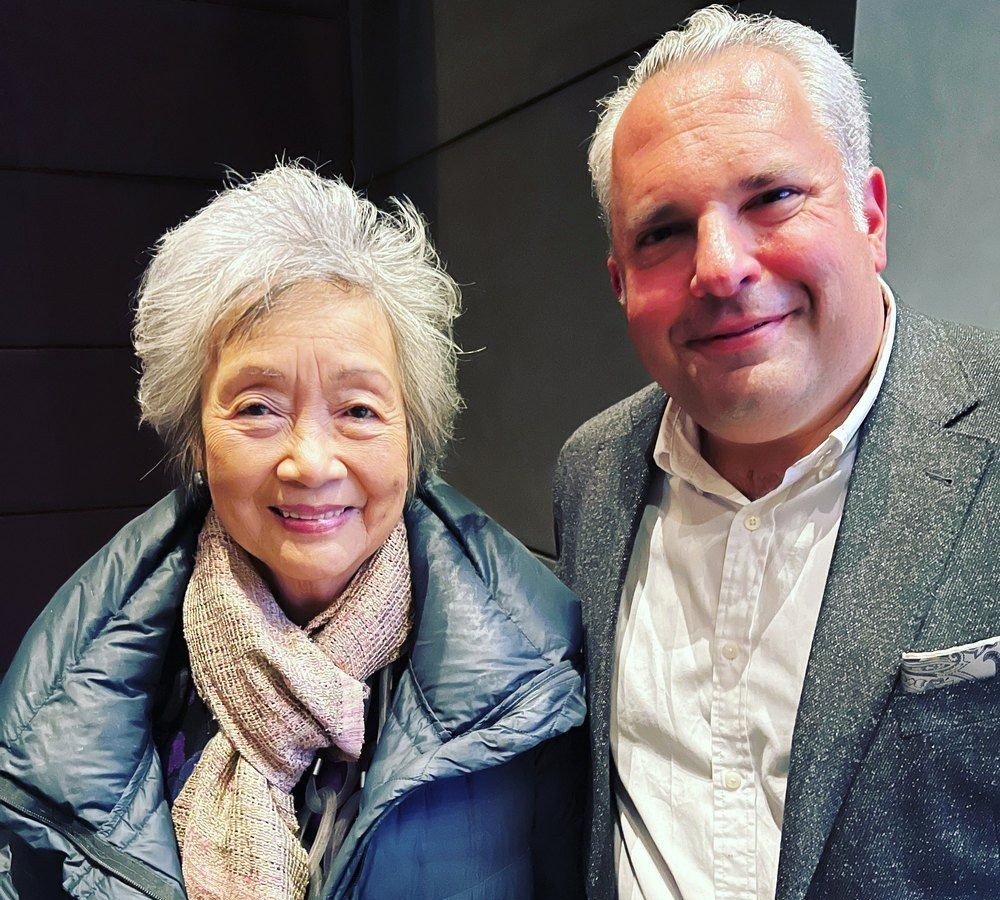
For the AGO's exhibition Leonard Cohen: Everybody Knows, Zelermyer appeared in public conversation with The Right Honourable Adrienne Clarkson, Canada's twenty-sixth Governor General — on the liturgical inheritance in Cohen's writing, and on the synagogue that stands behind it.
Cohen in Yiddish
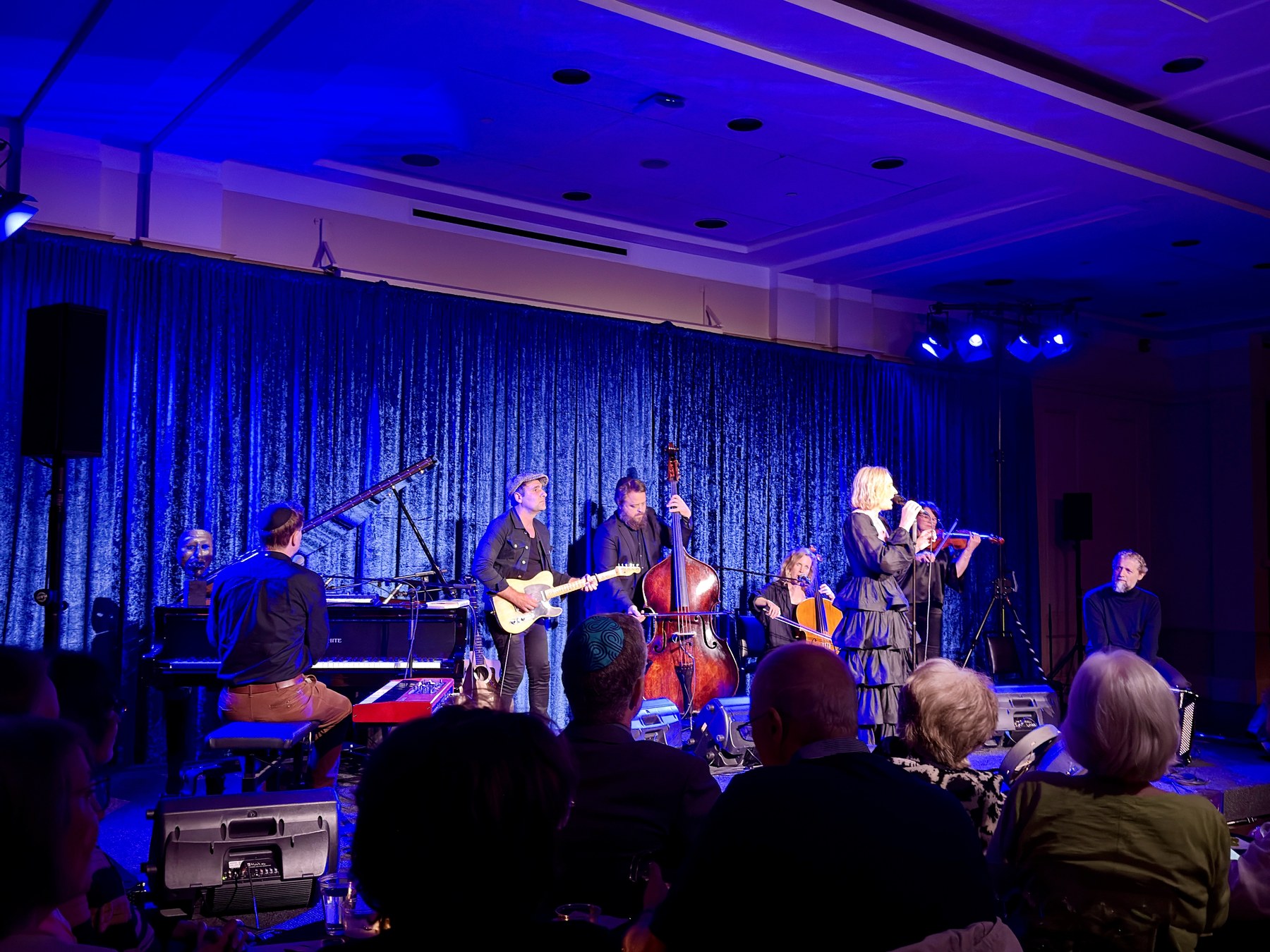
Louisa Lyne & Di Yiddishe Kapelye of Sweden brought Cohen’s songs and poems into mameloshn, newly set — their Canadian debut, at Shaar Hashomayim on 30 August 2026. Zelermyer presented the evening and sang in it: Cohen’s words returned to the language of his grandparents, in the building he grew up walking to.
2016–2026
Where the music travelled
Every screen placement below uses Cohen’s studio recording — which means the cantorial line and the choral parts heard on screen are Zelermyer’s and the Shaar Hashomayim choir’s. The one exception is noted.
Peaky Blinders
Series 3, episode 5 — the song's first public airing, nearly four months before the single was released.
Tin Star
Season 1, episode 4.
Assassin’s Creed: Origins
The cinematic story trailer, first shown at Gamescom. A trailer edit rather than the album master, so this is the one placement where the voices heard may not be the Shaar Hashomayim choir’s.
Black Earth Rising
Opening title theme of all eight episodes of Hugo Blick's series for BBC Two and Netflix. Not a scene, a signature — the voice that opened every episode.
Billions
Season 3, episode 3 — closing scene and end credits.
Game of Thrones: The Last Watch
The HBO documentary on the making of the final season, over the Night King sequence.
Dickinson
Season 2, episode 8 — carried on the Apple TV+ series’ own soundtrack for the season.
American Gods
Season 3, episode 7, Fire and Ice — closing the episode, hineni and all.
The Patient
Over the closing of the FX series — the finale, an episode titled The Cantor’s Husband.
Bones and All
Luca Guadagnino's trailer. Timothée Chalamet chose the song himself.
James Blake — Death of Love
Credited on the lead single from Trying Times, via a sample of the opening of the original recording. Adam Cohen cleared it — a rare thing, Blake has said, and he did not expect it to go through.
And into general knowledge
On Jeopardy!, 8 June 2017, under the category Final Resting Places, the $2,000 answer was a synagogue cemetery in Westmount.

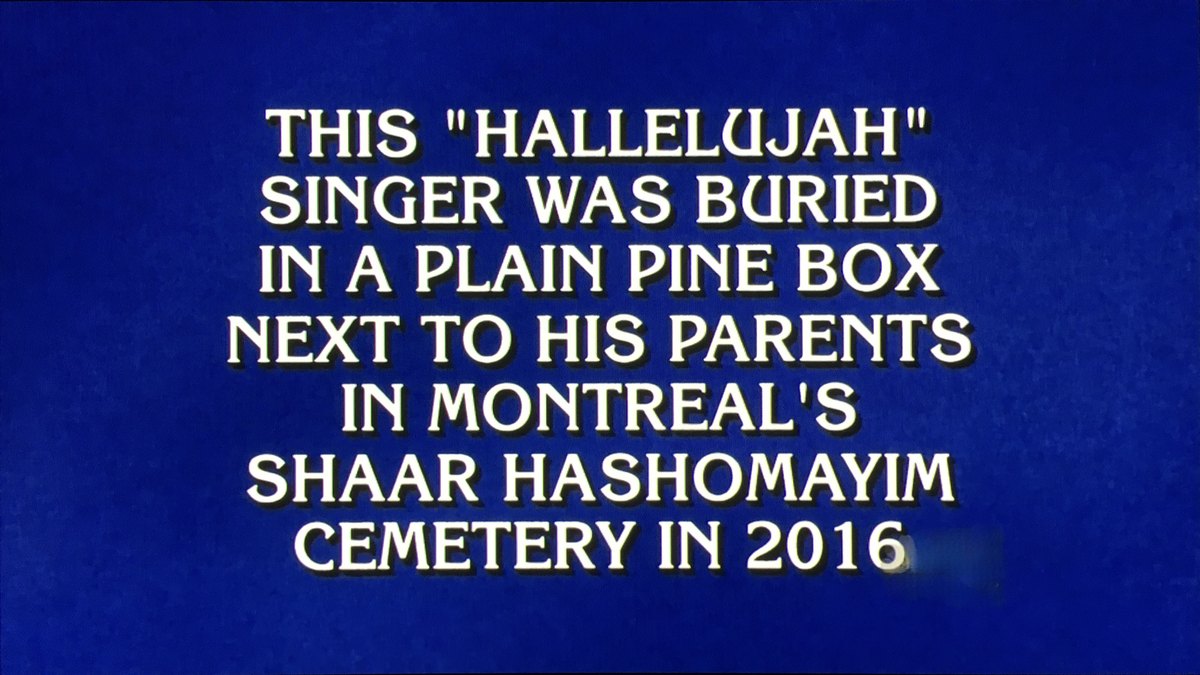
Cohen never answered the question Zelermyer is asked most often — why him, why these singers. His own conclusion, arrived at afterwards:
“They weren't just backup singers, they were religious singers, people grounded in a belief system that he subscribed to and that gave him a sense of comfort when he was facing down death. The first time he heard a cantor sing Hineni was in my sanctuary.”
On the night the Grammy was announced, he put the whole of it in one line: the relationship, the collaboration, the funeral, the memorials, the tribute concerts — and now this.
And, later:
“To have been a small footnote in the connection between Leonard, his religious identity, his identity as a son of Shaar Hashomayim — and ultimately to have been able to put him in the ground with dignity — that is an unforgettable part of my life's experience. And not exactly what you imagine when you become a cantor.” The Forward, March 2021
Leonard Cohen Makes It DarkerThe New Yorker · David Remnick · October 2016 25 Songs That Tell Us Where Music Is GoingThe New York Times Magazine · March 2017 Leonard Cohen's Third ActMaclean's · Brian D. Johnson · September 2016
ALSO
Billboard · Haaretz
Jerusalem Post
Montreal Gazette
The Globe and Mail
The Forward · CBC
Jewish Review of Books
All Cohen press
Asked what he would say to Cohen when the two of them finally met, after seven years of letters:
הִנֵּנִי
Listen to the interview · CBC Radio, Q, October 2016